

Why Does My Dog Keep Licking His Paws?
Persistent paw licking is often driven by a frustrating cycle of allergies, trapped moisture, and yeast overgrowth. Learn what causes red, itchy paws between the toes, how to identify yeast signs, and the simple daily routine needed to break the cycle.

Updated July 17, 2026 · 5 min read
Listen to this article
Read aloud in your browser. Product blocks and navigation are skipped.
In This Article
- Loading contents…
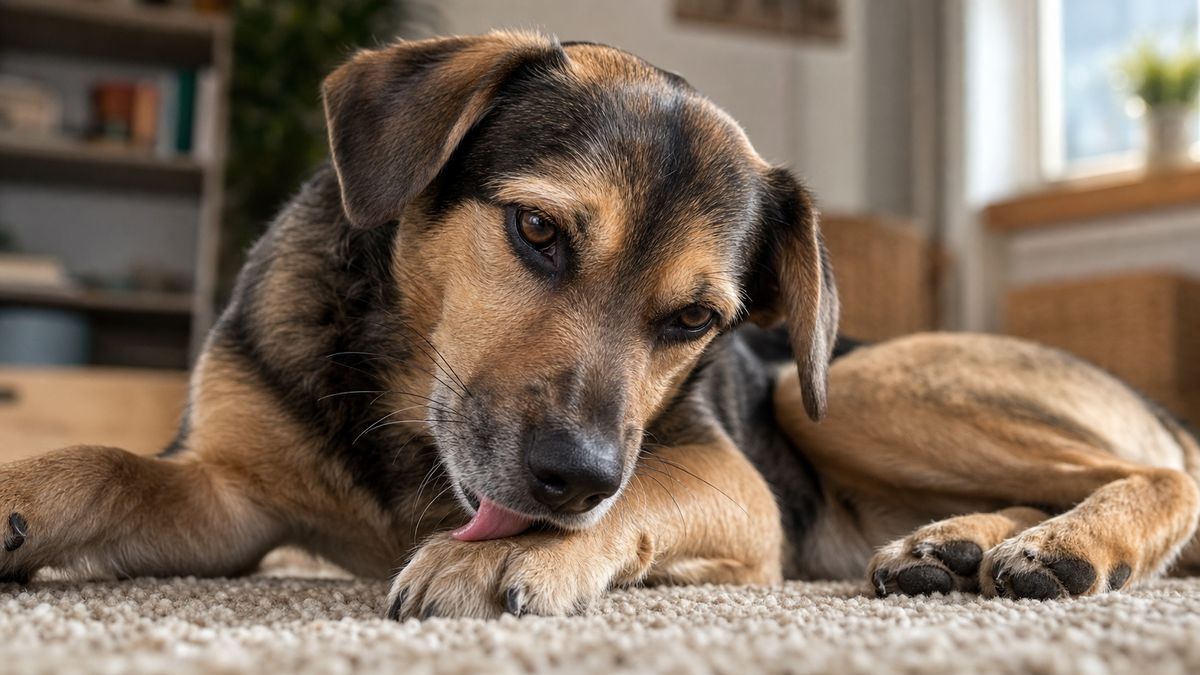
The short answer to the question "Why Does My Dog Keep Licking His Paws?" is a common question among dog owners. Allergies or a yeast infection might cause persistent paw licking in dogs, generating a vicious cycle. Allergens irritate the paws, licking keeps them wet, and moisture lets yeast overgrow between the toes, causing redness, rust-colored fur staining, and itching, which leads to even more licking. Breaking the cycle requires two things: reducing the allergen load on the paws and keeping the skin between the toes clean and dry.
If your dog licks, chews, or nibbles his feet every evening, or you've started hearing that wet, rhythmic slurp from across the room, in most cases it's an itch. Paws are one of the most common places for itching to show up.
The paw-licking cycle
Paws are ground zero for dog skin problems. They touch every allergen your dog walks through; they get wet constantly, and the tight spaces between toes and pads trap warmth and moisture, with nowhere for them to evaporate. Add saliva to that, and you've built an ideal environment for yeast.
Here's the loop most licking dogs are stuck in:
Allergen contact → itch → licking → constant moisture → yeast overgrowth → more itch → more licking.
The reason paw licking is so stubborn to get rid of is that treating only one part of the loop doesn't prevent the recurrence. Allergy medication with no attention to the skin between the toes leaves the yeast in place. Cleaning your dog's paws while it keeps walking through the trigger allergen every day means the irritation restarts with each walk. You have to address both the trigger (allergens) and the environment (moisture and overgrowth) where the itching develops.
Why are my dog's paws red between the toes?
A dog’s paw with red skin between the toes is a common sign of irritation or infection. Red skin between the toes, usually with brown or rust-colored fur staining, a musty "corn chip" smell, and greasy or flaky skin, is the classic picture of paw yeast overgrowth (Malassezia).
The tell-tale signs of paw yeast:
-
Pink or red skin in the webbing between the toes.
-
Rust, brown, or orange fur staining on the paws and between the toes.
-
A musty, yeasty, corn-chip or Fritos-like odor.
-
Greasy, waxy, or crusty texture to the skin.
-
Brown discoloration at the base of the nails if the nail beds are involved.
-
Persistent licking or chewing focused on one or two paws more than the others.
Bright red, swollen, or weepy skin can also indicate bacterial involvement (pododermatitis). Yeast and bacteria often appear together because both start the same way: irritation and trapped moisture.
Other causes of red paws worth ruling out
Not every red dog paw case is caused by yeast. Before you settle on a plan, check for:
-
Contact irritation: lawn treatments, fertilizer, ice melt, pool chemicals, hot pavement, or a newly cleaned floor.
-
A cut or foreign object: grass seeds, splinters, and grit lodged between the pads and toes. Check each paw carefully, including the webbing.
-
A nail or nail-bed problem: a cracked nail or infected nail bed will focus licking on one specific toe.
-
Anxiety or compulsive licking: usually affects all four paws fairly evenly, with no redness at first; over time, redness begins to appear.
-
Pain elsewhere: Dogs sometimes lick a paw on a limb that hurts higher up.
A useful rule of thumb: redness, licking, and odor usually indicate yeast. Redness plus limping is usually an injury or pain. Licking with no redness and no smell is more likely a behavioral or early-stage allergy.
How to treat red, itchy dog paws at home
Learning how to treat red, itchy dog paws starts with identifying the cause, reducing allergens, and keeping the paws clean and dry.
For mild to moderate cases with no swelling, limping, or open sores, a consistent daily routine does most of the work. Consistency matters more than intensity here; a small thing done every day beats an aggressive thing done occasionally.
1. Rinse or wipe the paws after every walk
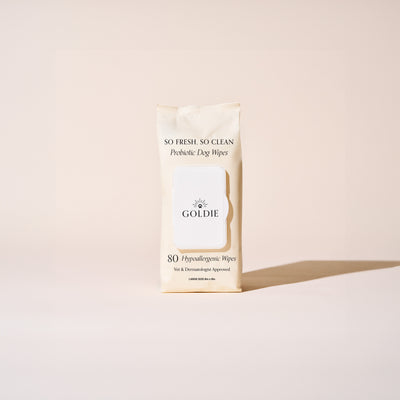
During allergy season, make a habit of removing the allergen load before your dog licks it off. Plain water works. A quick wipe with Goldie Probiotic Wipes is faster and reaches the webbing between the toes, where residue is more likely to collect.
2. Dry between the toes every single time
Every time the paws get wet, from rain, a rinse, a bath, or a walk through dewy grass. Use a soft towel, going gently into the webbing between each toe. This step removes yeast's favorite condition, and it takes only thirty seconds.
3. Apply a lick-safe antimicrobial spray daily
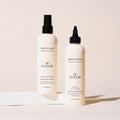
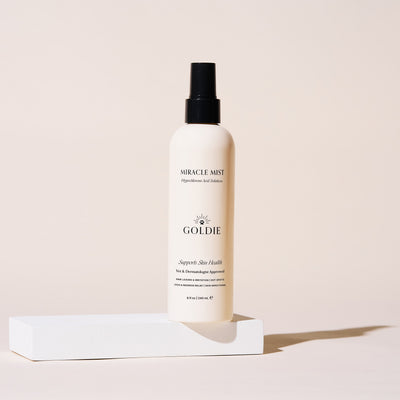
Goldie Miracle Mist is a vet and dermatologist-approved hypochlorous acid spray that's effective against almost every harmful microorganism and helps regulate the skin microbiome. As a result, yeast and bacteria have a harder time overgrowing between the toes.
For paws specifically, lick-safe isn't a nice-to-have; it's the whole requirement. Your dog will lick his paws after you treat them. Miracle Mist is safe if licked, sting-free on irritated skin, and gentle enough for daily use. Spray between the toes and across the pads, then let it air dry.
4. Consider a paw soak for stubborn cases
If the webbing is heavily stained or crusty, a few minutes of soaking can reach skin areas that a spray might miss. Soak, then dry thoroughly between every toe; an incompletely dried paw after a soak leaves your dog's skin vulnerable and can negate all the benefits of the extra care.
5. Address the allergy side with your vet
If the licking is seasonal, or year-round despite good home care, you're managing a symptom of something that could be more serious. Chronic paw yeast very often rides on an underlying allergy: atopic dermatitis, environmental allergens, or, less commonly, a food allergy, and that's where a visit to your vet is needed for prescription support, allergy testing, or a diet-changing trial.
What NOT to put on licked paws
The filter is simple: if it goes on a paw, assume it goes in the mouth. Avoid:
-
Hydrogen peroxide. Damages healing tissue and shouldn't be swallowed.
-
Rubbing alcohol. Stings badly on broken skin and dries it out further, generating more itching.
-
Tea tree oil and other essential oils are toxic to dogs, especially if ingested.
-
Vinegar or apple cider vinegar soaks might sting on burns or raw, broken skin between the toes.
-
Human antifungal or steroid creams are not dosed or formulated for dogs.
-
Zinc-containing balms (like diaper creams): Zinc is toxic if ingested in large enough quantities.
When to see your vet
Book a visit with your vet as soon as possible if you see any of these:
-
Swelling, limping, or obvious pain.
-
Bleeding, open sores, or raw, ulcerated skin.
-
Nail or nail-bed changes, or a nail that's loose or discolored.
-
Licking that hasn't improved after two weeks of consistent home care.
-
A sudden, intense onset, which often means a foreign object or an acute reaction.
-
Licking is paired with other signs: ear infections, itchy belly, hair loss, or gastrointestinal upset.
Recurring paw yeast is worth investigating properly rather than managing forever. Underlying allergies respond well to modern treatments, and a dog whose allergy is controlled stops rebuilding the yeast problem every few weeks.
Build a simple daily skin routine
Frequently Asked Questions
What does a yeast infection on a dog's paws look like?
Are red paws on a dog always yeast?
What home remedy helps red paws between the toes?
Why does my dog lick his paws at night?
How long does it take for red paws to clear up?