

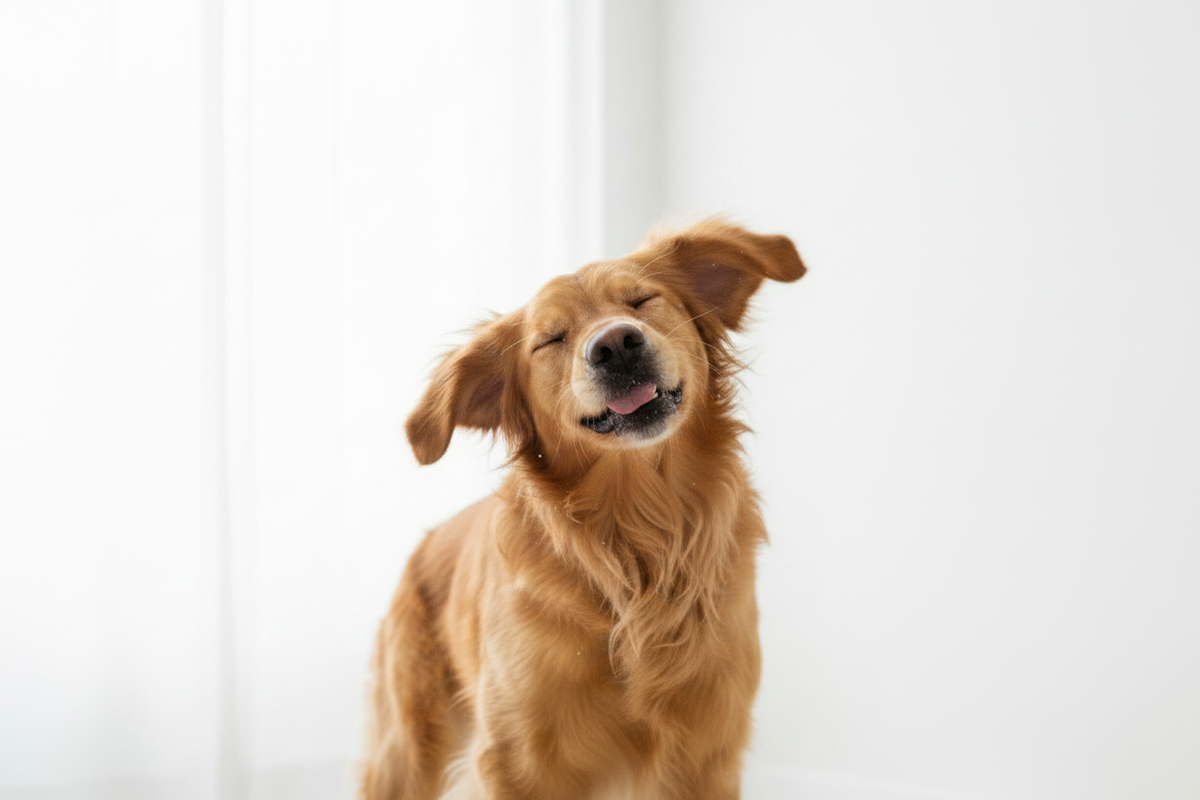
Why Does My Dog Keep Shaking His Head?
Repeated head shaking in dogs usually signals underlying ear irritation from trapped moisture, wax buildup, or early yeast overgrowth. Learn what causes the itching and how to care for your dog's ears before it leads to an infection.

Updated August 10, 2026 · 4 min read
Listen to this article
Read aloud in your browser. Product blocks and navigation are skipped.
In This Article
- Loading contents…
Repeated head shaking in dogs almost always signals irritation inside the ear canal — most commonly trapped moisture, wax buildup, or early yeast or bacterial overgrowth. Occasional shaking is normal; frequent shaking, ear scratching, odor, or redness means the ear environment is out of balance and needs attention before it progresses.
Why does my dog keep shaking his head? It is a common question among dog owners, and the cause is often linked to ear irritation, trapped moisture, or an imbalance of yeast and bacteria inside the ear canal. Understanding the reason behind the shaking can help you take action before the problem becomes more serious.
If you've noticed your dog shaking his head more than usual this week, there are some tips to figure out what the shaking actually means, tell an annoyance from a problem, and adopt a simple routine that helps keep it from turning into a vet visit.
What head shaking is telling you
Head shaking is usually a sign that something is irritating the ear canal. Understanding the difference between normal shaking and repeated shaking can help you identify when your dog needs attention.
Dogs shake their heads for one reason: to dislodge whatever is bothering them in their ear canal. It's a reflex, and a useful one; a single vigorous shake after a swim or bath is your dog doing exactly what nature intended.
The signal changes when the shaking becomes a pattern. A dog that shakes repeatedly through the day, especially paired with ear scratching, rubbing the side of the head along the couch or carpet, redness at the ear opening, discharge, or a noticeable smell, is telling you the shaking isn't working. Dog scratching its ears often occurs alongside head shaking because both behaviors are attempts to relieve irritation in the ear canal.
That distinction matters because the earliest stage of an ear problem is also the easiest to turn around. The dogs that end up on repeat prescriptions are usually the ones whose early signs got overlooked.
The most common causes of head shaking in dogs
1. Trapped moisture. A dog's ear canal is L-shaped; it runs down, then turns inward toward the eardrum. That bend is great at protecting the eardrum and terrible at draining water. After a swim or bath, water can sit in the horizontal section for hours: warm, dark, and moist, which is the exact environment in which yeast and bacteria multiply in.
2. Yeast or bacterial overgrowth. This is the earliest, most treatable stage of the ear-problem cycle. The signs are subtle at first: a mild odor (musty or sweet), brown or yellowish wax where there used to be almost none, pink or reddened canal skin, and itchiness that shows up as scratching and head shaking. Left alone, overgrowth often progresses to a painful, full-blown infection that requires prescription treatment.
3. Wax and debris buildup. A small amount of light wax is normal and protective. Excess wax does two unhelpful things at once: it traps moisture against the canal skin and gives microbes something to feed on.
4. Ear anatomy and hair. Some dogs are simply built for ear trouble. Floppy ears in Golden Retrievers, Labs, Cocker Spaniels, Basset Hounds, and Beagles act like a lid over the canal, holding warmth and moisture in. Other breeds, like Poodles, Doodles, and Shih Tzus, have hair growing inside the canal that absorbs and traps moisture. Narrow canals in French Bulldogs don't ventilate easily. If your breed is on this list, head shaking warrants faster attention, as the anatomy stacks the odds in favor of bacterial overgrowth.
5. Foreign material or ear mites. A grass awn (foxtail) lodged in the canal or an ear mite infestation causes sudden, intense, often frantic shaking, different in character from the intermittent shaking of moisture or early overgrowth. These should be vet visits, not home care. Foxtails in particular can migrate deeper and do real damage.
What does a dog ear infection smell like?
A yeasty ear smells musty or sweet; many owners describe it as bread-like or like corn chips. A bacterial problem smells stronger and fouler. A healthy ear has almost no smell, so any noticeable ear odor is an early warning sign and typically shows up before anything is visible. Dog ear smell can be one of the earliest clues that something has changed inside the ear, especially when it appears alongside scratching, head shaking, or redness.
That makes your nose the cheapest diagnostic tool you own. Make a habit of smelling your dog's ears weekly. You'll learn what their normal is, and you'll catch the shift from "nothing" to "faintly musty" days or weeks before redness, discharge, or pain would have told you.
Build a simple daily skin routine
How to help at home: the routine
The goal at home isn't treating an infection; it's managing the conditions that might trigger one. That comes down to being consistent with routine care.
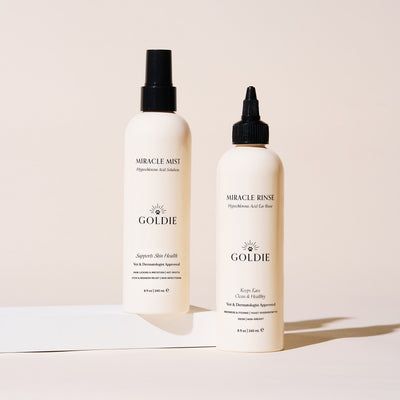
After every swim or bath: towel-dry the outer ear and the area around the opening, then apply a gentle ear rinse to help clear the moisture the towel can't reach. Goldie Miracle Rinse is a hypochlorous acid ear rinse that helps manage the moisture and microbial overgrowth that lead to ear issues. It's non-stinging, non-greasy, and gentle enough for regular use. The whole routine takes about ten seconds: towel, ears, rinse, done.
Weekly maintenance: for floppy-eared, hairy-eared, and allergy-prone dogs, a quick weekly rinse helps keep the ear microbiome in balance so problems don't get a foothold. This is just something small, sometimes boring, you want to do, so nothing dramatic happens later.
Never use cotton swabs — they might seal in moisture by packing debris deeper in the ear canal and irritate the skin. If the cotton swab is pushed too deep, it can damage the eardrum. Avoid rubbing alcohol or hydrogen peroxide. Alcohol and peroxide sting, dry out, and damage the canal skin, making the ear more susceptible to overgrowth once the tissue is irritated.
When to see your vet
Home care has a clear boundary. Go in promptly if you see any of the following:
-
Significant pain when the ear is touched.
-
Head tilt, stumbling, or loss of balance.
-
Swelling of the ear flap or around the canal.
-
Bloody or pus-like discharge.
-
Shaking that persists more than a few days despite drying and cleaning.
A head tilt or balance change can signal a middle-ear problem, and a ruptured eardrum changes what's safe to apply in the ear. When in doubt, have the vet look first; a quick otoscope exam settles the question, and early professional care is always cheaper than late professional care.
Frequently Asked Questions
Why is my dog scratching his ears, but they look clean?
Is it normal for my dog to shake his head after swimming?
What does a healthy dog ear look and smell like?
Am I cleaning my dog's ears too often?