

Why Does My Dog Stink Even After a Bath?
Doodles are highly susceptible to ear infections due to hairy ear canals, heavy ear flaps, and underlying allergies that trap moisture and wax. Learn why Goldendoodle and Labradoodle ears act up, how to spot warning signs, and the simple routine needed to keep them clean.

Updated June 19, 2026 · 3 min read
Listen to this article
Read aloud in your browser. Product blocks and navigation are skipped.
In This Article
- Loading contents…
The short answer: Your dog was clean and fluffy for about a day. Now that smell is back, and the reason is often that the bath removed surface dirt but did not address the underlying source of the smell.
A dog that still smells bad after a bath usually has a microbial odor source a bath can't fix — yeast or bacterial overgrowth on the skin, inside the ears, or in skin folds — or a coat that stayed damp too long, which makes overgrowth worse. Shampoo washes dirt away. It doesn't rebalance the skin microbiome.
Why the bath didn't work
Odor on a dog comes from two places:
-
Things on the coat: dirt, pollen, whatever he rolled in.
-
Things living on the skin: bacteria and yeast whose metabolic byproducts smell.
Baths handle the first category well. They barely address the second.
If your dog smells again within a day or two, or smells noticeably worse when damp, you're dealing with the second category. Bathing them again can actively make it worse: over-washing strips the natural skin barrier that keeps microbial populations in check, and a slow-drying coat is a humidity chamber. A thick, dry double coat can keep the skin damp for hours, which is the single most common reason a "clean" dog smells.
$26.00
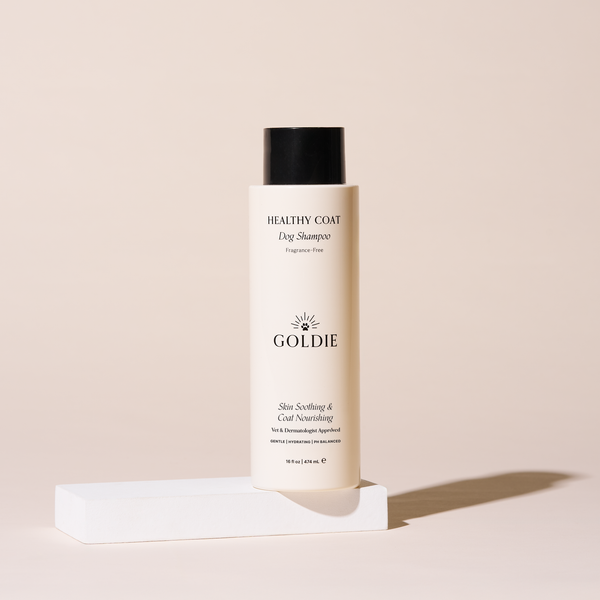
Healthy Coat
Find the source: the five-spot sniff test.
Before you buy anything, localize the smell. Get your nose within an inch of each spot in turn; you'll usually find it in under a minute.
1. Ears. Lift the flap and smell directly into the canal. A musty or yeasty smell indicates bacterial overgrowth in the ear. This is a usually overlooked source of the odor, because owners generally smell the dog rather than the ear specifically. Head-Shaking guide →
2. Paws. A corn-chip smell means paw yeast, usually accompanied by rust-colored fur staining and licking. Frito feet guide →
3. Skin folds. Face folds, lip folds, tail fold, armpits, groin. Frenchies, Bulldogs, and Pugs are classic cases, but any overweight dog can develop fold-like areas. Trapped moisture smells sour or yeasty. Bulldog wrinkle care →
4. Skin and coat overall. A greasy or waxy coat with a musty smell across the whole body indicates generalized yeast overgrowth, often allergy-related and often accompanied by intense itching.
5. Mouth and rear. Dental issues produce a smell that follows the dog everywhere and transfers to whatever he licks, including his own fur. Anal gland issues smell sharply fishy, not musty. Both should be checked by a veterinarian as soon as possible.
How to actually fix a smelly dog
1. Bathe with the skin in mind
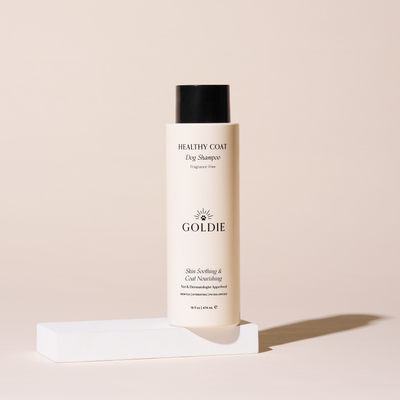
Use a gentle, microbiome-supporting shampoo like Goldie Healthy Coat Shampoo rather than a heavy degreasing or fragranced formula. Then dry the coat completely, using a towel and airflow. Check that it's dry at the skin level, not just at the surface. Be extra diligent with the armpits, groin, folds, between the toes, and behind the ears. A damp undercoat is the number one reason clean dogs smell.
2. Treat the odor zones between baths
Goldie Miracle Mist is a veterinarian and dermatologist approved solution, formulated with hypochlorous acid, a clinically recognized broad-spectrum antimicrobial, that helps regulate the skin microbiome so the yeast and bacteria that produce the smell stop overgrowing. Use it on skin, folds, and paws; it's safe anywhere on the body, sting-free, and completely lick-safe.
Ears need their own product, since a spray can't reach down the ear canal. Goldie Miracle Rinse is non-greasy and gentle enough for regular maintenance.
3. Freshen without masking
Goldie Quick Spritz is a lick-safe deodorizing spray that works at the source rather than masking odors. Spraying fragrance on a yeasty coat doesn't give you a clean dog; it gives you yeast masked by perfume, and the yeast outlasts the perfume every time.
4. Wipe down between baths
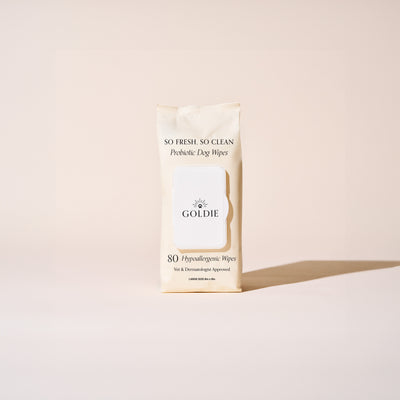
Goldie Probiotic Wipes handle folds, paws, and quick cleanups so you're not reaching for the shampoo every week. Targeted cleaning of the spots that actually smell is the right approach, instead of increasing the recommended frequency of baths that would strip the whole coat of its natural protection.
Build a simple daily skin routine
When to see your vet
Persistent body odor is a symptom, and the underlying cause, often allergies, may require medical treatment.
Book a visit with your vet for:
-
A sudden strong odor with no obvious cause.
-
Smell paired with scratching, hair loss, or a greasy coat.
-
A fishy odor, or scooting (anal glands).
-
Bad breath with tartar, red gums, or reluctance to chew.
-
Ear discharge, head shaking, or pain when you touch the ears.
-
No improvement after two weeks of consistent home care.
Chronic odor from allergic or hormonal skin disease responds well to treatment once it's identified. A dog whose underlying condition is properly handled generally stops smelling for good.
Frequently Asked Questions
How often should I bathe a smelly dog?
Why does my dog smell worse when wet?
Can I use deodorizing spray on my dog every day?
Why does my dog always stink even though he's healthy?
Why does my dog stink so bad all of a sudden?