

Why Is My Dog So Itchy? A Vet-Reviewed Guide to Causes and Relief
Constant itching in dogs is commonly linked to allergies, parasites, bacterial or yeast overgrowth, or dry and irritated skin. When a dog is itchy but has no visible fleas, environmental allergies, food reactions, mites, and secondary skin overgrowth may need to be investigated. The location, timing, smell, and appearance of the irritation can offer important clues.

Updated July 29, 2026 · 12 min read
Listen to this article
Read aloud in your browser. Product blocks and navigation are skipped.
In This Article
- Loading contents…
Watching your dog scratch occasionally is normal. But when the scratching becomes constant, wakes them up at night, or turns into licking, chewing, rubbing, and biting, something is likely irritating their skin.
The difficult part is that itching is not a diagnosis. It is a symptom that can have several possible causes.
According to the Merck Veterinary Manual, some of the most common causes of itching in dogs include allergies, parasites, and skin infections. Secondary bacterial or yeast overgrowth can also make an existing skin problem significantly more uncomfortable.
That means the answer to "Why is my dog so itchy?" may involve more than one issue at the same time.
An allergy may weaken the skin barrier. Scratching may further damage that barrier. Moisture and irritation may then create conditions in which bacteria or yeast can multiply more easily.
Understanding this cycle can help you recognize the early signs, support your dog's skin at home, and know when it is time to involve your veterinarian.
Key Takeaways
- Itching is a symptom, not a diagnosis — allergies, parasites, microbial overgrowth, and dry skin are the most common drivers.
- A dog can be intensely itchy with no visible fleas. Allergies and secondary yeast or bacterial overgrowth frequently occur together.
- Where your dog itches, when it started, and whether there is odor or redness are all useful clues for your vet.
- Gentle home care can support mild irritation, but persistent, painful, or spreading symptoms need veterinary evaluation.
Is It Normal for Dogs to Scratch?
Every dog scratches occasionally. A brief scratch after waking up, rolling outside, or wearing a collar is not usually cause for concern.
Itching may indicate a larger problem when your dog:
- Scratches repeatedly throughout the day
- Wakes up to scratch at night
- Licks or chews the same area constantly
- Rubs their face or ears against furniture
- Develops red, greasy, flaky, or thickened skin
- Has thinning fur, bald spots, scabs, or open sores
- Smells musty, sour, or unusually strong
- Shakes their head or paws at their ears
- Reacts when a sensitive area is touched
- Seems restless, distracted, or unable to settle
Persistent itching deserves attention even when the skin initially looks normal. Dogs can feel significant irritation before visible redness, hair loss, or sores appear.
The Four Most Common Reasons Dogs Itch
1. Environmental or Food Allergies
Allergies are one of the most common explanations for persistent itching, particularly when no fleas are found.
Dogs can react to environmental allergens such as:
- Grass
- Tree or weed pollen
- Mold
- Dust mites
- Dander
- Household allergens
- Seasonal changes
Environmental allergies are often called canine atopic dermatitis. Cornell University's College of Veterinary Medicine explains that affected dogs may have a defective outer skin barrier. When allergens contact the skin, the immune system creates inflammation that appears as itching.
Food reactions can also contribute, although environmental allergies are generally more common. A veterinarian may recommend a properly controlled elimination diet when a food-related reaction is suspected. Switching foods randomly or using an over-the-counter "limited ingredient" food is not always enough to identify a true food allergy.
Where do dogs itch when they have allergies?
Allergic dogs commonly show irritation around the:
- Paws and between the toes
- Ears
- Face and muzzle
- Belly
- Armpits
- Groin
- Inner legs
- Base of the tail
You may notice paw licking, rust-colored saliva staining, recurring ear irritation, red skin, or rubbing around the face.
Allergies can also set the stage for secondary problems. As a dog scratches or licks, the skin barrier becomes more damaged. Bacteria and yeast that normally live on the skin can then become harder for the skin to keep in balance.
2. Yeast or Bacterial Overgrowth
Healthy dog skin naturally hosts microorganisms, including bacteria and yeast. Their presence alone does not necessarily mean a dog has an infection.
Problems can develop when changes in the skin allow those microorganisms to multiply excessively.
Common contributing factors include:
- Allergic inflammation
- Repeated scratching or licking
- Trapped moisture
- Skin folds
- Poor airflow
- Frequent swimming
- Incomplete drying after baths
- Excess skin oil
- Certain hormonal or immune conditions
A common yeast found on canine skin is Malassezia. When it overgrows, it may be associated with intense itching, redness, greasy skin, flaking, darkened skin, and a musty odor.
Bacterial overgrowth may cause redness, bumps, crusts, pustules, hair loss, soreness, or oozing areas. Yeast and bacterial issues can occur at the same time.
Signs that microbial overgrowth may be contributing
Look for:
- A musty, sour, or stale odor
- Greasy or waxy skin
- Red or inflamed areas
- Brown debris around the ears
- Thickened or darkened skin
- Flakes or crusts
- Rust-colored fur from licking
- Irritation between the toes
- Recurring hot spots
- Symptoms that worsen after swimming or bathing
Smell alone cannot diagnose yeast or bacterial overgrowth. A veterinarian may perform skin cytology, tape impressions, ear swabs, skin scrapings, cultures, or other testing to determine what is present.
Supporting the skin microbiome
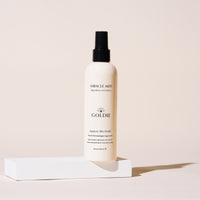
Goldie Miracle Mist is a gentle hypochlorous acid spray formulated to help regulate the skin microbiome and limit the conditions where yeast and bacteria overgrow.
3. Fleas, Mites, and Other Parasites
Fleas are a major cause of itching, but they are not the only parasite that can make a dog uncomfortable.
Potential causes include:
- Fleas
- Flea allergy dermatitis
- Sarcoptic mange mites
- Demodex mites
- Ear mites
- Lice
- Ticks
- Other less common parasites
A dog does not need to be covered in fleas to experience severe itching. A flea-allergic dog may react intensely to a relatively small exposure.
Fleas can also be difficult to find because dogs groom themselves, and adult fleas spend only part of their life cycle on the animal.
Check for flea dirt, which may look like black pepper around the lower back, base of the tail, belly, or inner thighs. When placed on a damp white paper towel, flea dirt may dissolve into a reddish-brown stain.
However, the absence of visible fleas or flea dirt does not rule out parasites.
Mites can cause itching, inflammation, dandruff, crusting, and hair loss. Some types are highly contagious and require veterinary diagnosis and treatment.
If your dog is receiving consistent veterinarian-recommended parasite control and remains itchy, continue investigating rather than assuming the problem is resolved.
4. Dry, Irritated, or Damaged Skin
Dry skin can cause generalized, low-grade itching and flaking.
Possible contributors include:
- Dry weather
- Low indoor humidity
- Excessive bathing
- Harsh or heavily fragranced shampoos
- Shampoo residue left on the coat
- Very hot bath water
- Nutritional imbalance
- Repeated exposure to allergens or irritants
- Underlying medical conditions
Dry skin may appear as fine white flakes, a dull coat, mild redness, or all-over scratching without a strong odor.
However, visible flakes do not always mean the skin simply needs more moisture. Allergies, mites, bacterial overgrowth, yeast, and hormonal conditions can also cause scaling.
That is why persistent "dandruff" should not automatically be treated with oils or frequent bathing.
Why Is My Dog So Itchy but Has No Fleas?
When a dog is itchy but no fleas are visible, the most common possibilities include:
- Environmental allergies
- Food-related reactions
- Yeast or bacterial overgrowth
- Mites or other parasites
- Contact irritation
- Dry or damaged skin
- An underlying medical condition
Allergies and secondary microbial overgrowth frequently occur together.
An allergic reaction can create inflammation and weaken the skin barrier. The dog then scratches and licks, causing additional damage and moisture. This can create conditions in which yeast or bacteria multiply more easily.
Your dog may therefore need support for both the underlying trigger and the secondary skin changes.
A veterinary examination is the best way to distinguish between these causes. Flea treatment alone will not resolve allergic skin disease, and treating yeast or bacteria without controlling the underlying allergy may lead to recurring symptoms.
Why Is My Dog So Itchy All of a Sudden?
Sudden itching usually suggests a recent exposure, environmental change, parasite bite, or rapidly developing area of irritation.
Possible triggers include:
- A seasonal increase in pollen
- Contact with freshly cut grass
- A new treat, food, or supplement
- A new shampoo or grooming product
- Household cleaning products
- Laundry detergent used on bedding
- A flea or insect bite
- A recent swim
- Moisture trapped after a bath
- A plant, chemical, or surface irritant
- A developing hot spot
- An irritated ear
- A foreign object between the toes
Start by checking your dog's paws, ears, belly, armpits, groin, skin folds, and base of the tail. Look for redness, swelling, discharge, odor, damp fur, bumps, scabs, foreign material, or a painful area.
Seek urgent care: sudden facial swelling, widespread hives, vomiting, weakness, collapse, or difficulty breathing can indicate a serious allergic reaction and requires immediate veterinary attention.
Why Is My Dog Itching and Licking Their Paws?
Paw licking is one of the most common signs of allergic skin irritation.
A dog's paws regularly contact grass, pollen, soil, cleaning products, road residue, and moisture. Allergens can remain between the toes, while repeated licking keeps the area damp.
This combination can contribute to:
- Redness between the toes
- Swollen skin
- A musty odor
- Rust-colored saliva staining
- Greasy residue
- Small bumps
- Tenderness
- Yeast or bacterial overgrowth
Inspect the top and bottom of each paw, including between the toes and around the nail beds.
Paw licking can also be caused by a thorn, grass awn, cracked nail, burn, cyst, orthopedic pain, or anxiety-related behavior. Persistent licking of a single paw is especially important to investigate.
Learn why dogs repeatedly lick their paws →
Why Is My Dog Itchy After a Bath?
A dog may itch after bathing for several reasons:
- The shampoo was too harsh
- Fragrance or another ingredient caused irritation
- Shampoo residue was not rinsed out completely
- The water was too hot
- The dog was already experiencing an allergy flare
- Moisture remained trapped around the ears, paws, or skin folds
- Bathing removed too much protective skin oil
- Scrubbing irritated an already damaged skin barrier
Always use a shampoo formulated specifically for dogs. Human skin and canine skin have different needs, and human shampoos may be too irritating.
Rinse longer than you think is necessary, particularly around the belly, armpits, legs, and skin folds. Then dry the coat and moisture-prone areas thoroughly.
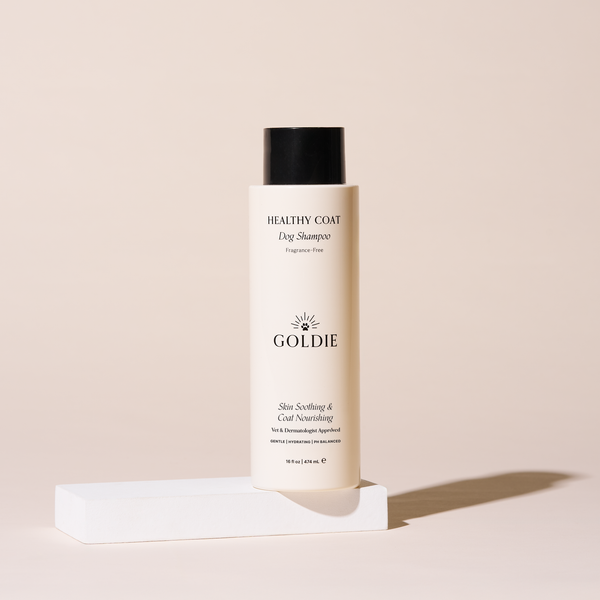
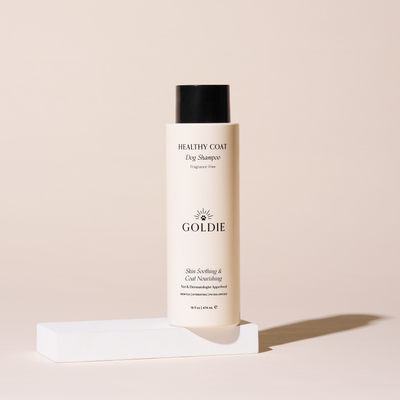
Healthy Coat
$26.00
- 1% colloidal oatmeal and niacinamide to soothe and hydrate dry, itchy skin
- Manuka honey and hyaluronic acid to support the skin barrier
- Provitamin B5 and vitamin E for hydration and coat shine
- Cleanses without stripping your dog's natural oils
Why Does My Dog Itch More at Night?
Nighttime itching does not necessarily mean the underlying condition changes after dark. Instead, several factors can make the discomfort more noticeable:
- There are fewer distractions
- The dog is lying still
- Warm bedding raises skin temperature
- Blankets may trap humidity
- Evening routines may coincide with allergen exposure
- The dog has more opportunity to lick or scratch
Dogs with significant itching may also wake their owners by scratching, shaking their heads, licking their paws, or repeatedly repositioning.
Itching that interrupts sleep suggests meaningful discomfort and should not be ignored.
Wash bedding regularly in a fragrance-free detergent and ensure it dries completely. This can reduce accumulated allergens, dander, and moisture, but it will not replace treatment for allergies, parasites, or microbial overgrowth.
The Itch-Scratch Cycle
Persistent itching often becomes self-reinforcing. The cycle can look like this:
- An allergen, parasite, irritant, or other trigger causes itching.
- The dog scratches, licks, chews, or rubs the area.
- Repeated friction damages the skin barrier.
- Damaged skin becomes more inflamed and sensitive.
- Moisture, skin debris, yeast, and bacteria become harder to regulate.
- The resulting irritation causes even more itching.
This helps explain why a small problem can progress into a hot spot, open sore, ear issue, or widespread flare.
It also explains why simply stopping the scratching is not always enough. The original trigger, the damaged skin barrier, and any secondary overgrowth may all need to be addressed.
"When a dog is itchy with no fleas, I'm often looking closely at allergies and secondary yeast or bacterial overgrowth. They frequently occur together because inflamed allergic skin loses some of its normal barrier function."
DR. TATIANA ROGERS, DVMHow to Check an Itchy Dog at Home
A brief daily skin check can help you identify changes before they become more serious.
Step 1: Watch the behavior
Notice whether your dog is:
- Scratching with a hind leg
- Biting the skin
- Licking repeatedly
- Chewing the paws
- Rubbing the face
- Scooting
- Shaking the head
- Avoiding touch
- Waking up at night
The behavior can help you locate the irritated area.
Step 2: Check the common problem zones
Examine:
- Between the toes
- Paw pads
- Nail beds
- Ear flaps
- Visible outer ear
- Chin and muzzle
- Armpits
- Belly
- Groin
- Inner thighs
- Skin folds
- Base of the tail
Do not insert cotton swabs or products deeply into the ear canal.
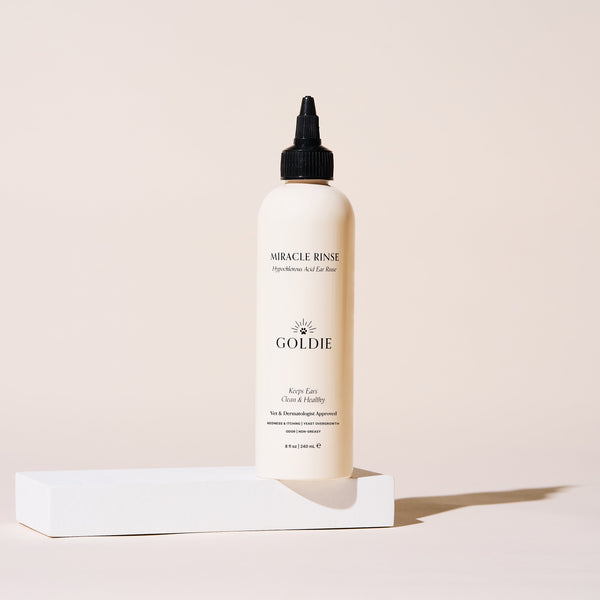
Miracle Rinse
$26.00
- Eliminates 99.999% of bacteria, yeast, and fungi on contact
- Helps regulate the ear microbiome to prevent overgrowth
- Fast-acting relief from itching, redness, irritation, and odor
- Gentle enough for routine ear hygiene between vet visits
Step 3: Look for visible changes
Check for:
- Redness
- Swelling
- Greasiness
- Flaking
- Scabs
- Bumps
- Hair loss
- Darkened skin
- Wet or oozing areas
- Brown or yellow debris
- Saliva staining
Step 4: Notice odor
An unusual musty, sour, or strong odor may accompany yeast or bacterial overgrowth.
Odor is a useful clue, but it cannot identify the specific organism or determine whether prescription treatment is needed.
Step 5: Consider recent changes
Ask yourself:
- Did allergy season begin?
- Did my dog recently swim?
- Did I change food or treats?
- Did we use a new shampoo?
- Was the bedding washed in a new detergent?
- Did my dog visit a groomer, boarding facility, or dog park?
- Did we miss a parasite-control dose?
- Is the itching localized or all over?
Bring these details to your veterinarian if the symptoms continue.
What Can I Do for My Dog's Itchy Skin at Home?
Home care can support mild irritation, reduce environmental triggers, and help protect the skin while you monitor your dog.
It should not be used to delay veterinary care when symptoms are severe, painful, widespread, or persistent.
1. Rinse allergens from the paws and coat
During allergy season, pollen and grass residue can collect on your dog's fur and paws. After walks, consider:
- Rinsing the paws with clean water
- Gently wiping the lower legs and belly
- Drying between the toes
- Washing bedding regularly
- Vacuuming common resting areas
Avoid aggressive scrubbing, which can further irritate the skin.
2. Keep moisture-prone areas dry
Moisture can collect around:
- Paws
- Ears
- Armpits
- Groin
- Facial folds
- Tail folds
- Thick undercoats
Dry your dog thoroughly after swimming, rain, bathing, or water play. Pay special attention to areas with limited airflow. Do not use high heat directly on irritated skin.
3. Use a gentle topical skin-care product
A properly formulated hypochlorous acid skin spray may be used to gently cleanse and support irritated skin, depending on its label directions.
Goldie Miracle Mist contains hypochlorous acid, commonly abbreviated as HOCl. HOCl is also produced as part of the body's innate immune response. Topical veterinary HOCl products are used for the management of several types of skin irritation and wound care.
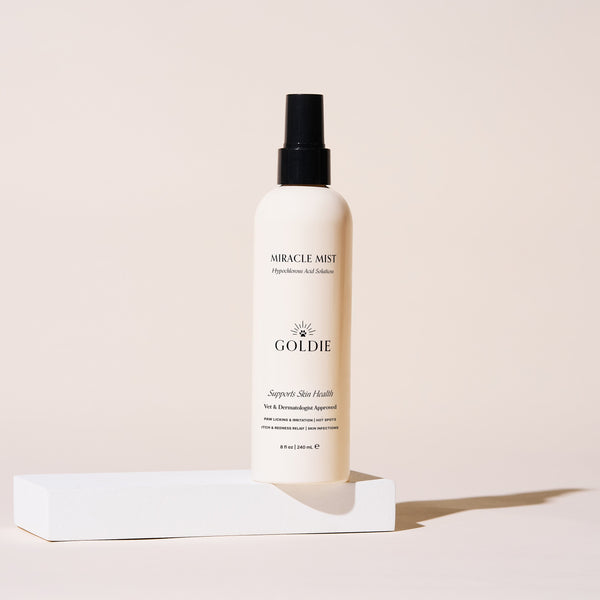
Miracle Mist
From $23.00
$51.00
- Gently cleanse irritated skin
- Help manage the skin environment
- Support a healthy skin microbiome
- Help reduce the conditions in which unwanted microbial overgrowth may occur
- Fit into a regular skin-care routine for itch-prone dogs
4. Bathe gently and strategically
More bathing is not always better.
For some allergy-prone dogs, appropriately timed bathing can remove allergens and buildup. But excessive bathing with harsh products can dry and irritate the skin.
Use lukewarm water and a dog-specific shampoo. Rinse thoroughly and dry your dog completely.
Explore Goldie Healthy Coat Shampoo →
5. Reduce licking and scratching
Persistent licking can prevent the skin from recovering. Depending on the location, your veterinarian may recommend:
- A soft recovery collar
- A protective shirt
- A clean bootie for brief supervised use
- Keeping nails trimmed
- Treating the underlying itch medically
Do not wrap irritated skin tightly or leave damp coverings in place. Trapped heat and moisture may make the area worse.
6. Keep a symptom diary
Track:
- When the itching began
- Where it occurs
- Time of day
- Foods and treats
- Walk locations
- Weather
- Baths and swimming
- Products used
- Photos of the skin
- Whether symptoms are improving
Patterns can help your veterinarian determine whether the problem is seasonal, environmental, food-related, parasitic, or connected to another condition.
What Should I Avoid Putting on My Dog's Itchy Skin?
Avoid using human skin products without veterinary guidance. Products that may irritate dogs or cause problems when licked include:
- Rubbing alcohol
- Hydrogen peroxide
- Concentrated essential oils
- Fragranced human lotions
- Human anti-itch creams
- Undiluted vinegar
- Harsh disinfectants
- Medicated products prescribed for another pet
- Products containing ingredients that are unsafe when ingested
Even commonly recommended home remedies can sting damaged skin or delay appropriate treatment. Use products formulated for dogs and follow the label instructions.
Can Changing My Dog's Food Stop the Itching?
Sometimes, but not always.
Food reactions can cause itching, recurring ear problems, paw licking, and gastrointestinal symptoms. However, many itchy dogs have environmental allergies rather than a food allergy.
A true food trial is more structured than switching from one retail food to another. Your veterinarian may recommend a hydrolyzed diet or a carefully selected novel-protein diet for a defined period, with no unapproved treats, flavored medications, table food, or chews.
Do not begin a restrictive homemade diet without veterinary nutrition guidance. Long-term nutritional imbalances can create additional health problems.
Can Dry Skin Make a Dog Itch All Over?
Yes. Dry, compromised skin may cause generalized scratching and flaking.
However, all-over itching can also result from allergies, parasites, bacterial or yeast overgrowth, or systemic disease.
Signs that appear consistent with dry skin include:
- Fine flakes
- A dull coat
- Mild generalized itching
- Little or no odor
- Symptoms that worsen in dry weather
If your dog has severe itching, greasy skin, hair loss, sores, redness, odor, or thickened skin, simple dryness is less likely to be the complete explanation.
Why Does My Dog's Skin Smell When They Are Itchy?
A strong or unusual odor may be connected to oil, moisture, skin debris, yeast, bacteria, or an ear problem.
Owners often describe the smell as:
- Musty
- Sour
- Sweet
- Stale
- Corn-chip-like
- "Fritos"-like
Dogs naturally have some odor, and paw bacteria can contribute to a mild corn-chip smell. A sudden, intense, or widespread odor accompanied by itching, redness, greasy skin, or discharge deserves closer attention.
Learn why your dog may smell like Fritos →
When Should I Take My Itchy Dog to the Vet?
Schedule a veterinary appointment if:
- The itching is persistent or worsening
- Your dog cannot sleep comfortably
- There is significant hair loss
- The skin is bleeding, crusted, swollen, or painful
- You see open sores or hot spots
- There is a strong odor
- The ears contain discharge
- Your dog repeatedly shakes their head
- The problem keeps returning
- More than one pet or person in the home is itchy
- Your dog seems lethargic or unwell
- Home care is not producing clear improvement
- You suspect mites, infection, or a food allergy
Seek urgent veterinary care for: facial swelling, difficulty breathing, collapse, widespread hives, severe weakness, repeated vomiting, rapidly spreading swelling, extreme pain, a serious wound, or sudden neurological or behavioral changes.
A veterinarian may recommend skin cytology, skin scrapings, flea-combing, fungal testing, cultures, allergy assessment, bloodwork, or a controlled diet trial.
How Veterinarians Treat Itching in Dogs
Treatment depends on the cause and may involve more than one approach. A veterinary plan may include:
- Parasite treatment
- Prescription itch control
- Allergy medication
- Allergen immunotherapy
- Antibacterial or antifungal treatment
- Medicated shampoo
- Ear medication
- A controlled elimination diet
- Treatment for an underlying hormonal condition
- Skin-barrier support
- A long-term maintenance routine
The goal is not only to make the dog scratch less. It is to identify and manage the underlying trigger while treating any secondary skin problem.
The itch itself is a symptom. Effective long-term care requires us to look at the skin barrier, the microbiome, parasites, allergies, and any secondary infection rather than addressing only the scratching.
DR. TATIANA ROGERS, DVMHow to Help Reduce Future Itching Flares
Not every flare can be avoided, especially in a dog with chronic allergies. However, a consistent routine may help reduce exposure and catch problems earlier. Consider:
- Following year-round veterinarian-recommended parasite control
- Rinsing paws after high-allergen walks
- Drying thoroughly after water exposure
- Checking ears and paws regularly
- Washing bedding in a gentle detergent
- Using dog-specific grooming products
- Avoiding excessive bathing
- Addressing symptoms early
- Following your veterinarian's allergy plan
- Using a gentle topical skin-care product as directed
- Keeping a record of recurring seasonal patterns
For allergy-prone dogs, consistency is often more helpful than waiting for a severe flare and trying several new products at once.
Build a simple daily skin routine
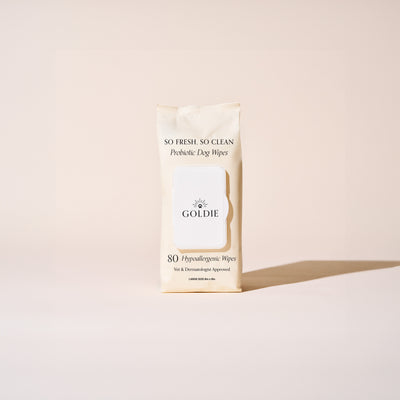
So Fresh, So Clean Probiotic Wipes
Removes dirt, allergens and irritants from paws, folds, and coat.
From $14.00
Shop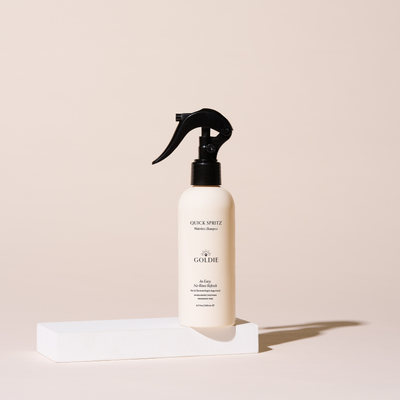
The Bottom Line
If your dog is constantly itchy, the most likely causes include allergies, parasites, yeast or bacterial overgrowth, and dry or irritated skin.
Dogs without visible fleas may still have allergies, mites, flea allergy dermatitis, or a secondary skin problem. Pay attention to where your dog itches, when it started, whether there is odor or redness, and whether the symptoms are seasonal or recurring.
Gentle home care can help reduce allergens, manage moisture, and support the skin. Goldie Miracle Mist may be incorporated into a regular external skin-care routine to gently cleanse irritated areas and help manage the conditions in which microbial overgrowth may occur.
Persistent or severe itching requires veterinary evaluation. The best results often come from combining professional diagnosis with a consistent at-home skin-care routine.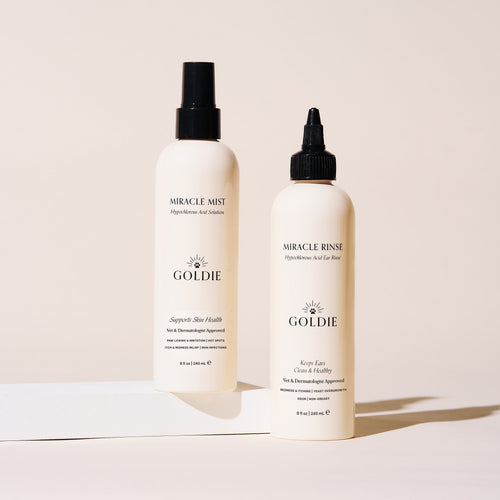
Miracle Duo
Skin and ears are usually part of the same allergy picture. Pair Miracle Mist with Miracle Rinse and cover both — from $51.
Frequently Asked Questions
Why is my dog so itchy all of a sudden?
What can I put on my dog to help with itching?
Can I use hypochlorous acid on my dog every day?
Is hypochlorous acid safe if my dog licks it?
Why does my dog itch more at night?
Can allergies cause yeast problems in dogs?
How do I know whether my dog has dry skin or yeast?
Will my dog's itching go away on its own?
How often should I bathe an itchy dog?