

Dog Ear Mites vs. Ear Wax: How to Tell the Difference
Normal ear wax and ear mites can both leave brown material in the ear, so color alone won't tell you which one you're seeing. Learn the useful differences between mite debris and wax, why yeast and bacteria complicate the picture, what happens at the appointment, and what you can safely do before it.

Updated September 29, 2026 · 6 min read
Listen to this article
Read aloud in your browser. Product blocks and navigation are skipped.

In This Article
- Loading contents…
Normal ear wax and an ear-mite infestation can both involve brown material, so color alone cannot tell them apart. Ear mites may cause dark, crumbly debris with scratching and head shaking, but yeast, bacteria, and other ear problems can look similar. A veterinarian can examine the canal and check material for mites before choosing treatment.
Finding something dark in an ear makes it tempting to search for a matching picture. The problem is that a picture tells you what material looks like, not what is living in it or how sore the ear underneath may be.
Start with your dog's comfort and what has changed. That gives you a more useful next step than trying to identify a parasite from a cotton ball.
Key Takeaways
- Color can't tell them apart. Normal wax and ear-mite debris can both look brown.
- Some wax is healthy. What matters is whether the amount is usual for that ear and the skin stays comfortable.
- Mites spread between pets. Tell your vet about every dog and cat in the home, including those not scratching.
- Confirmation needs an exam. Mites are identified with an otoscope or a microscope, not a cotton ball.
- Cleaning isn't mite treatment. Confirmed mites need an effective parasite product suited to each animal.
- Know the urgent signs. Severe discomfort, marked swelling, a head tilt, or balance changes need urgent advice.
Ear wax has a normal job
A little wax can be part of a healthy ear. You don't need to remove every trace to be doing a good job of caring for your dog. What matters is whether the amount is typical for that ear and whether the skin stays comfortable.
Get familiar with the visible opening during ordinary grooming. Compare both sides without putting a tool into the canal. A new smell, increasing discharge, or a dog who suddenly avoids ear handling deserves attention even if the material looks like ordinary wax.
VCA's ear-cleaning guidance explains why healthy ears may need little cleaning and why over-cleaning can create irritation. A spotless cotton ball is not the goal.
A little wax can be part of a healthy ear. You don't need to remove every trace to be doing a good job of caring for your dog.
Dr. Tatiana Rogers, DVMWhat ear mites are
Otodectes cynotis is the ear mite commonly involved in dogs and cats. These tiny parasites can spread through contact with affected animals. A new pet or close contact with another animal can therefore be relevant history, although it does not confirm an infestation. Mites do not survive off the host well enough for environmental survival to be the main driver of transmission, so treatment of in-contact pets is generally more important than intensive household decontamination.
Do not rely on seeing movement with the naked eye. Identification may require an otoscopic examination or microscopic assessment of collected material. The Companion Animal Parasite Council's ear-mite guidance describes transmission and diagnosis.
Tell the clinic about other pets, including cats, and whether any are scratching. Keep each animal's name and symptoms straight; “someone in the house has itchy ears” is less helpful than knowing who started first.
Dog ear mites vs. ear wax: useful clues
| Detail | Ordinary wax may look like | An ear problem may look like |
|---|---|---|
| Amount | A small amount consistent with the dog's usual ears | New or quickly returning buildup |
| Texture | Waxy residue | Crumbly, thick, wet, or otherwise changed material |
| Comfort | Little or no scratching; relaxed handling | Repeated scratching, rubbing, or head shaking |
| Visible skin | No new inflammation | Redness, swelling, or soreness |
| Other animals | No related symptoms | Other pets may be itchy, especially with a shared cause |
This table helps you decide what to report. It does not separate mites from infection reliably. Dark debris described as “coffee grounds” can raise suspicion for mites, but it is not proof. A dog with mites can also need care for secondary inflammation or infection.
If head shaking is the clearest change, our guide to why dogs keep shaking their heads can help you describe the behavior before calling.
Why yeast and bacteria enter the conversation
An itchy ear with discharge may involve yeast, bacteria, mites, a foreign body, or inflammation from another cause. More than one problem can be present. Treating the wrong one can leave your dog uncomfortable while you wait for a product to work.
Do not choose an ear-mite medicine because the wax is dark, or an antifungal because it smells unpleasant. VCA's ear-infection overview explains why examination and sampling guide treatment.
The history can help direct the check. A one-sided problem after an outdoor outing, repeated episodes in the same ear, and itchy ears in several pets are different stories. None replaces the examination, but all are worth sharing.
What happens at the appointment?
The vet assesses the visible skin and canal and may examine a sample. The eardrum's condition also matters when choosing what can safely go into the ear. If pain or heavy material limits the examination, the clinic may need to make the dog comfortable before proceeding.
Ask whether you should avoid cleaning before the visit. Removing all the debris just before sampling can make the visit less informative. If you have already cleaned, simply report the product and timing.
Bring any medication packaging, including products used on other pets. Do not assume a monthly parasite preventive covers ear mites unless the exact product's use has been confirmed for your dog.
Ear-mite treatment is different from wax removal
If mites are confirmed, the plan needs an effective parasite treatment suited to the animal. Species, age, weight, and health can affect product choice. Never transfer a dog's product to a cat or estimate a smaller dose for a puppy without veterinary direction.
If ear mites are confirmed in one dog or cat, ask your veterinarian for a treatment plan for every dog and cat in the household, including pets without obvious scratching. Ear mites can spread by close contact, and an animal with few or no visible signs can help maintain the infestation. Cleaning one dog's visible wax does not resolve a household parasite problem.
A vet may also recommend ear cleaning or separate treatment for associated disease. Ask what each product does and when to use it. If you are given several instructions, write them by pet and by ear so doses do not get mixed up.
Where Goldie Miracle Rinse fits
Goldie Miracle Rinse is an ear-care option for an appropriate cleaning or maintenance plan. It is not an ear-mite treatment. Ask whether to use it during the current episode, after treatment, or only for future routine care.
If your dog's ears are comfortable and your vet has already recommended this rinse, follow the product directions and the agreed interval. If the ear becomes newly painful, red, or discharge-heavy, pause and ask whether the plan needs to change.
For ordinary dirt on the surrounding coat, So Fresh, So Clean Probiotic Wipes can stay with your grooming supplies. Keep them out of the ear canal. A body wipe and an ear product have different intended uses.
The useful purchase is the one that fits the job. An ear rinse can support appropriate care without being expected to identify or kill a parasite.
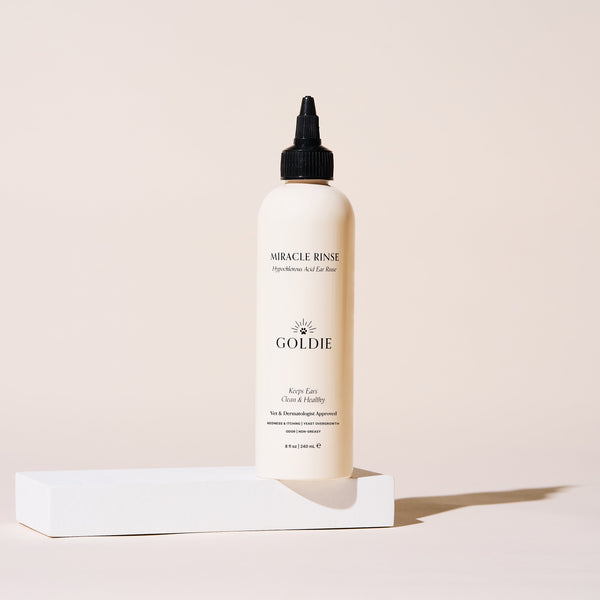
Miracle Rinse
$26.00
- Eliminates 99.999% of bacteria, yeast, and fungi on contact
- Helps regulate the ear microbiome to prevent overgrowth
- Fast-acting relief from itching, redness, irritation, and odor
- Gentle enough for routine ear hygiene between vet visits
What you can safely do before the diagnosis
Keep the ear dry and avoid adding new products while you arrange advice. Photograph only what is comfortably visible. Note when the scratching started and whether one or both ears are affected.
Do not insert cotton swabs, tweezers, or a phone accessory into the canal to get a closer view. Do not pour in oil to “smother” suspected mites or try peroxide, alcohol, or vinegar. Those experiments can irritate the ear and do not establish the diagnosis.
If scratching is causing injury, ask the clinic about a protective collar. Do not wrap the head or tape the ear shut. Ask about contact with other pets while you await assessment if an infestation is suspected.
Build a simple daily skin routine
When to get help promptly
Seek urgent advice for: severe discomfort, marked swelling, a persistent head tilt, balance changes, or a dog who seems unwell.
Arrange an appointment for persistent scratching, new odor, increased discharge, or pain. Seek urgent advice for severe discomfort, marked swelling, a persistent head tilt, balance changes, or a dog who seems unwell.
An otherwise playful dog can still have a painful ear. Waiting until appetite changes is not a useful way to decide whether the problem matters.
For dogs with recurring ear trouble, the longer-term plan may involve more than parasites. Our Doodle ear guide and Golden Retriever ear guide cover grooming and lifestyle factors to discuss once the current problem has been assessed.
Let the diagnosis choose the next bottle
A little familiar wax in a comfortable ear may need very little attention. A changing, itchy ear needs a closer look. Once you know what is happening, choose Goldie Miracle Rinse only for the cleaning or maintenance step that belongs in the plan.
That keeps ear care simple: notice changes, get the cause checked, and use each product for a clear purpose.
This guide is educational and does not replace a veterinary ear examination.Frequently Asked Questions
Is black ear wax always ear mites?
Can I see ear mites without a microscope?
Can a dog get ear mites from a cat?
Can ear mites and an infection occur together?
Will cleaning remove all the mites?
Does Miracle Rinse treat ear mites?
Should every pet get the same medication?
What if the debris returns after cleaning?