

Doodle Ear Infections: Goldendoodle & Labradoodle Ear Care Guide
Goldendoodles and Labradoodles are highly prone to ear infections due to hairy canals, heavy ear flaps, and underlying allergies. Learn why Doodle ears trap moisture and wax, how to spot early warning signs, and the simple routine needed to keep them clean and healthy.

Updated August 10, 2026 · 7 min read
Listen to this article
Read aloud in your browser. Product blocks and navigation are skipped.
In This Article
- Loading contents…
Call your vet if you see: odor from one or both ears, redness or swelling inside the ear, brown/yellow/black discharge, frequent head shaking or scratching, or whimpering and pulling away when ears are touched — especially if any of it comes on suddenly or seems painful.
Why Goldendoodles and Labradoodles get so many ear infections
Compare a Goldendoodle's ears to a German Shepherd's. The Shepherd's erect, open ears get constant airflow — moisture evaporates, debris falls out, the ear canal stays relatively dry. A Doodle's pendulous ears work the opposite way: the heavy flap drops over the canal like a lid, creating a warm, humid pocket with almost no ventilation, the perfect environment for yeast and bacterial overgrowth.
Then there's the hair. Dense, curly ear hair from the Poodle side grows right down into the canal, holding wax, dirt, pollen, and water so debris can't clear the way it should. Worth being straight with you here: research disagrees on how much the hair itself matters. One Nova Scotia clinic study found ear shape strongly predicted infection while ear hairiness did not. But hair does one thing nobody disputes — it holds water. And water in a sealed canal is the part that reliably causes trouble.
Allergies are the third piece, and usually the most important one. Many Doodles develop environmental allergies (grass, dust mites, mold) or food sensitivities between six and 24 months old. Allergic inflammation swells the canal lining, increases secretions, and breaks down the skin's natural defenses. Most chronic otitis externa cases are associated with atopic disease, and in some dogs the ears are the only visible sign. In general practice, allergic dermatitis was the single most common primary cause. This is why Goldendoodle ear infections so often circle back to an allergy nobody has diagnosed yet.
Add swimming, grooming baths, and humid months, and those hairy ears simply never fully dry.
If your Doodle leans Retriever — a swimmer, a lake dog, a sprinkler dog — the Golden Retriever ear infection guide covers the post-swim side of this in more detail.
Warning signs your Doodle's ears are in trouble.
Your dog can't tell you an ear hurts, so behavior changes come first — usually days before you can see anything.
Watch for:
-
Frequent head shaking — more than the occasional post-nap shake. (More on that here: why does my dog keep shaking his head.)
-
Ear scratching or rubbing on furniture, carpet, or your leg.
-
Head tilting to one side, as if favoring the sore ear.
-
Flinching or pulling away when you reach near the ears.
-
Matting of the hair around the ear opening.
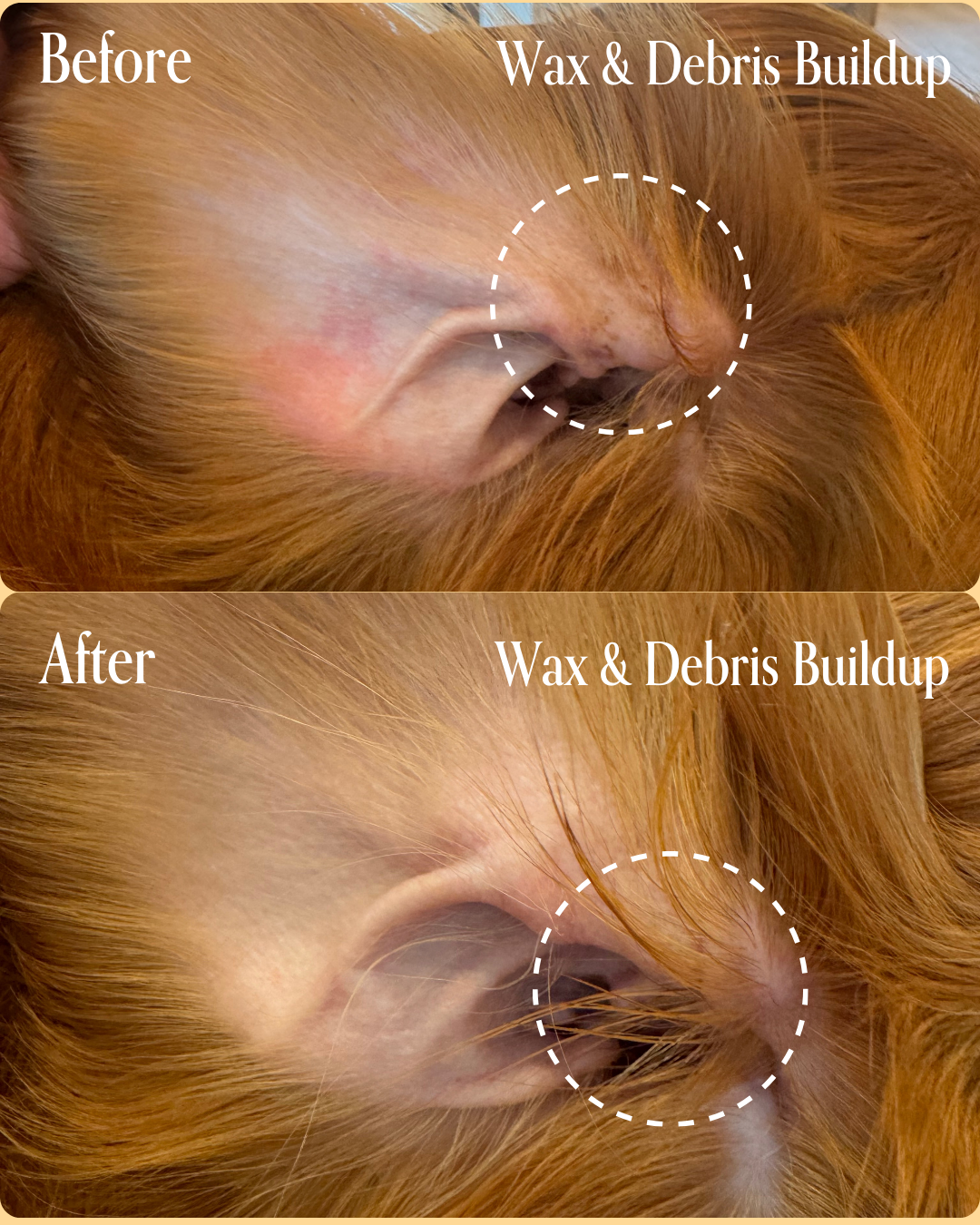
What you see when you lift the flap depends on severity. Mild cases show light redness, a little extra wax, and a faint musty odor — odor is often the earliest tell, before anything looks obviously wrong. Advanced cases bring strong red skin, painful swelling inside the canal, thick yellow, brown, or black discharge, crusting, and a strong yeasty smell.
The 10-second ear check: lift the flap, look for redness or debris, sniff, compare both ears, and repeat every two to three days during warm or humid weather.
See your vet promptly if your dog cries when the ear is touched, there is obvious swelling of the flap, loss of balance, a constant head tilt, eye flicking, or any sign your dog seems nauseous or disoriented. Don't wait those out.
How to clean your Doodle's ears safely at home
Routine ear care at home is safe, simple, and one of the highest-leverage habits you can build for a breed this predisposed. Veterinary guidance is consistent on the principle: regular cleaning with a vet-appropriate ear cleaner, plus drying after water exposure, reduces flare-ups in prone dogs.
Always use a dog-specific ear cleaner — not water, hydrogen peroxide, vinegar, alcohol, essential oils, or anything from your own medicine cabinet. Those either sting inflamed skin, leave moisture behind, or damage delicate tissue.
The routine:
-
Inspect first — lift the flap, look, and sniff.
-
Fill the canal with cleaner until it's nearly full.
-
Massage the base of the ear for 20–30 seconds to break up wax and debris.
-
Let your dog shake — that's how loosened material comes out.
-
Wipe the outer ear and canal entrance only, with cotton balls or gauze.
Never insert cotton buds, fingers, or tools into the canal. They might push debris deeper into the ear canal, risking real damage to the eardrum and can turn a mild issue into a painful one.
Frequency: most Doodles do well with a full clean every one to two weeks, plus a rinse after any swim, bath, or very muddy walk. Dogs with a history of chronic infections often need weekly cleanings. Ears with no wax, odor, or irritation can be left alone between scheduled cleanings — over-cleaning dries and irritates the canal, which creates its own problems.
Where Goldie fits
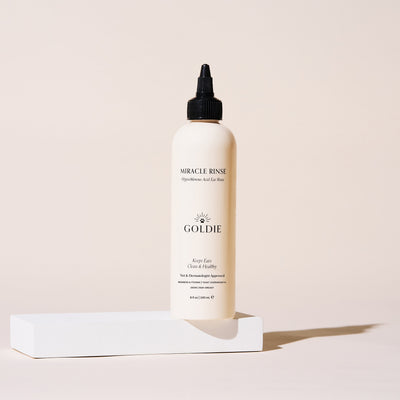
We built Miracle Rinse for exactly this ear: hairy, sealed, chronically damp. It's a gentle hypochlorous acid (HOCl) ear rinse — the same class of compound used in clinical wound care — formulated to flush the canal, help manage the moisture and debris that hair holds onto, and reduce the conditions where yeast and bacteria overgrow. It isn't greasy, it doesn't sting, and it's designed for regular use rather than crisis-only use, which matters enormously for a breed that needs maintenance, not rescue.
For most Doodles: weekly. For water lovers: after every swim and every bath—ten seconds, then dry.
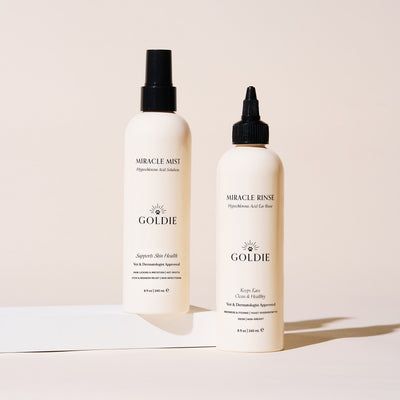
If allergies are part of your Doodle's picture — paw licking, belly redness, itchy skin alongside the ears — Miracle Mist covers the same ground on skin, and the two are the pairing most of our allergy-prone customers end up using together. Both were formulated by our dermatology PA-C co-founder and credentialed by a Harvard-trained dermatologist and a board-certified veterinarian (meet the experts).
The ear hair question: pluck, trim, or leave it alone?
This is the most confusing topic for Doodle owners, mostly because groomers and vets genuinely disagree.
The case for managing the hair: trimmed or thinned hair allows more airflow, makes wax easier to remove, and in dogs with recurrent problems, clearing the canal opening can help.
The case against aggressive plucking: yanking hair out creates micro-tears in the canal lining, and that inflammation invites the exact bacteria and yeast you were trying to avoid. Veterinary opinion has shifted in recent years toward minimal plucking and light trimming rather than full extraction.
The practical answer: don't attempt deep plucking at home. Ask for an "ear hair check and tidy" at grooming appointments every six to eight weeks, and let your vet and groomer assess your individual dog's canal and history together.
Daily and seasonal ear care for Doodles
Doodle ear care is a routine, not a one-time fix — and it should shift slightly with the seasons.
|
Frequency |
What to do |
|---|---|
|
Every 2–3 days |
Lift the flap for a quick look and sniff. |
|
Weekly |
Thorough inspection of both ears. |
|
Every 1–2 weeks |
Full clean with a vet-appropriate solution. |
|
After every swim, bath, or wet walk |
Dry the ears deliberately, then rinse. |
Spring and summer: pollen and grass seeds peak. Check for foxtails, seeds, and burrs after hikes — a lodged awn causes rapid, painful inflammation and was the second most common primary cause of otitis in one clinical review. Check ears every few days through allergy season.
Humid months: ears stop drying on their own. Step up to weekly cleaning and prioritize airflow.
Winter: indoor heat dries skin, but snow play still leaves moisture behind—dry ears after every session.
Grooming days count as water days. Ask your groomer to dry the ears deliberately, and rinse when you get home. Odor within a day or two of an appointment almost always means bath water stayed behind.
Build a simple daily skin routine
Miracle Duo
Skin and ears are usually part of the same allergy picture. Pair Miracle Mist with Miracle Rinse and cover both — from $51.
From $51.00
Shop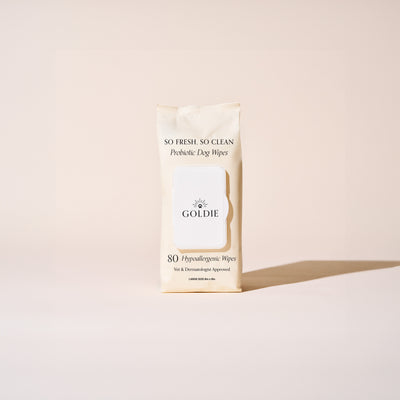
So Fresh, So Clean Probiotic Wipes
Removes dirt, allergens and irritants from paws, folds, and coat.
From $14.00
ShopWhen ear problems keep coming back
Some Doodles get repeat infections despite consistent home care. When that happens, it almost always points to something deeper than hygiene.
The most common underlying drivers:
-
Environmental allergies (grass, dust mites, pollen) — by far the most frequent.
-
Food allergies to common proteins; ear infections show up in a large share of food-allergic dogs, and the ears are sometimes the first sign.
-
Chronic moisture retention from ear shape and swimming habits.
-
Narrowed or thickened canals from repeated, poorly treated inflammation.
-
Middle ear involvement — otitis media is estimated in up to about half of chronic otitis externa cases and is a classic reason infections keep returning.
-
Hormonal conditions like hypothyroidism.
-
Ear mites, less common in adults but worth ruling out.
If your dog has ear infections more than two or three times a year, infections that don't clear after a full course of drops, or symptoms in both ears at once, ask your vet about an allergy work-up and a long-term management plan rather than another round of the same treatment.
At the visit, expect an otoscope exam and cytology (a smear checked under a microscope to identify yeast, bacteria, or both), plus culture or imaging if the case is severe or resistant. Treatment depends on what the cytology shows. Most infections clear in seven to 14 days; badly swollen or long-standing cases take weeks and need rechecks. Left untreated, chronic inflammation can lead to permanent canal changes and hearing loss, and surgery is occasionally discussed for canals beyond medical management.
If your Doodle fits that pattern, you're managing a medical condition, not failing at grooming. The goal of a home routine — and of Miracle Rinse — is to support the vet's plan between visits, not to replace it.
Frequently Asked Questions
How often should I clean my Goldendoodle or Labradoodle's ears?
Should I pluck my Goldendoodle's ear hair?
Why do my Doodle's ears smell after grooming?
Can I prevent Doodle ear infections just by changing food?
Is there anything I should avoid putting in my Doodle's ears?
Should Doodle puppies have their ears handled differently?