

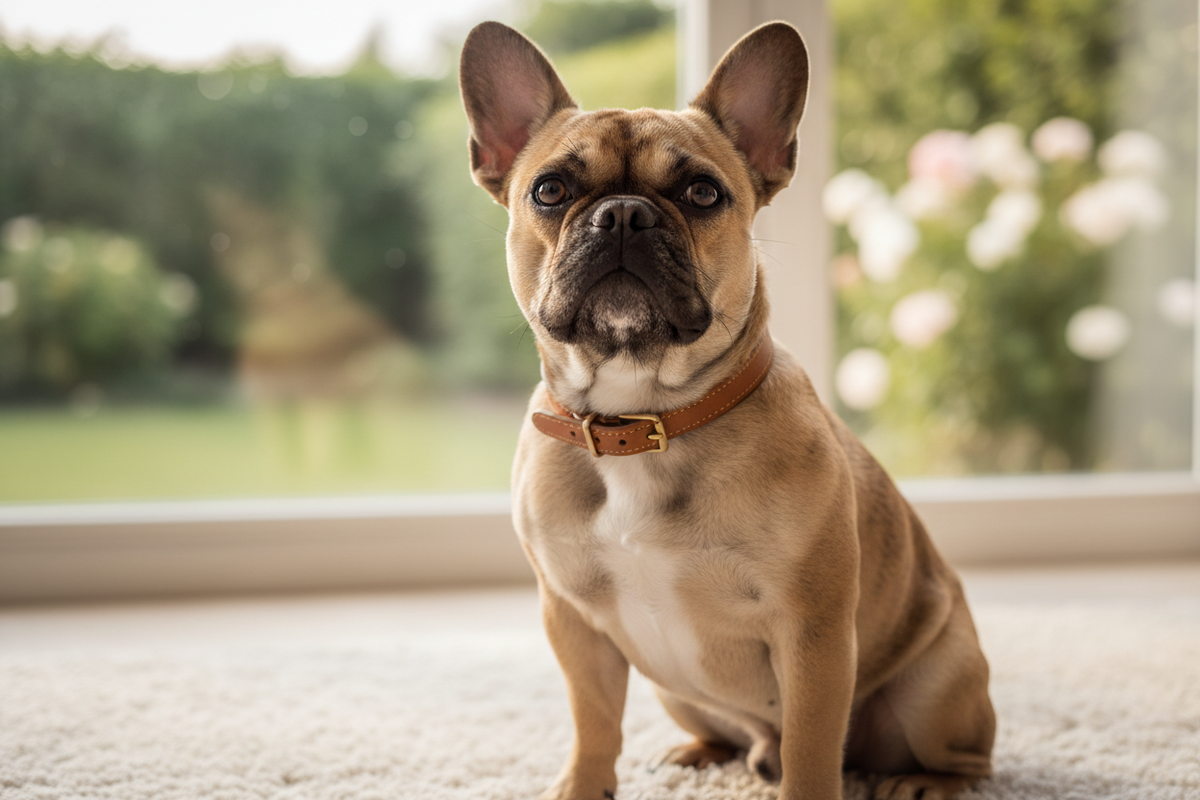
French Bulldog Skin Issues: Why Frenchies Itch & What Helps
French Bulldogs are genetically predisposed to skin issues caused by allergies, moisture-trapping skin folds, and yeast overgrowth. Learn the key causes, warning signs, and an easy, preventive care routine to relieve itching and keep their skin barrier healthy.

Updated August 10, 2026 · 8 min read
Listen to this article
Read aloud in your browser. Product blocks and navigation are skipped.
In This Article
- Loading contents…
If you own a French Bulldog, you already know the greatest hits. The 2 a.m. paw licking. The smell from the nose rope. Pink armpits, a red belly, ears that need attention every few weeks, and a dog who scratches the second you sit down to relax.
French Bulldog skin issues are rarely random. Most follow a few predictable patterns, and once you identify the cause, you can build a routine that helps manage the problem more effectively.
Here's the part that's genuinely useful to know: almost none of this is random, and most of it responds to a routine rather than a prescription. Frenchie skin problems follow a small number of very predictable patterns — and once you can name which one you're looking at, you know exactly what to do about it.
The short answer: French Bulldogs are one of the most skin-problem-prone breeds because they combine three risk factors — a strong tendency toward allergies, deep facial and tail folds that trap moisture and debris, and a short coat that offers little barrier protection. Most Frenchie skin issues trace back to allergies, fold dermatitis, or yeast overgrowth, and very often all three at once.
Frenchies really are different — here's the data.
This isn't breed folklore. In a VetCompass study of UK primary-care veterinary records, French Bulldogs had significantly increased odds for 20 of 43 common disorders compared with non-Frenchies. Two of the standout predispositions are skin conditions, and one is an ear condition that behaves like a skin condition:
|
Condition |
French Bulldog odds |
|---|---|
|
Skin fold dermatitis (vs non-Frenchies) |
11.18× |
|
Skin fold dermatitis (vs crossbred dogs) |
25.92× — 2nd highest of any UK breed |
|
Aural (ear) discharge |
14.40× |
For context, skin fold dermatitis affects roughly 0.37% of dogs overall. And in the breed's own disorder profile, the most common single diagnosis recorded in a year was otitis externa at 14.0% of Frenchies, with skin fold dermatitis at 3.0%.
The practical translation: with a Frenchie, you aren't managing a possibility, you're managing a probability. Preventive routines that are genuinely optional for a Border Collie are load-bearing for this breed — and the earlier they start, the less firefighting you do later.
The four most common French Bulldog skin conditions
1. Allergies
Environmental and food allergies are common in the breed and drive most of what owners can easily identify: itching, paw licking, recurrent ear problems, red bellies and armpits, and flare-ups that clear with treatment but eventually return.
French Bulldog itchy skin is most often linked to allergies, especially when the itching affects the paws, ears, belly, and skin folds.
Allergies matter more than anything else on this list because they're usually the underlying cause of the other issues. Allergic skin is inflamed skin, and inflamed skin loses the barrier function that normally keeps resident yeast and bacteria in check. That's why so many Frenchie skin stories turn out to be one problem wearing three costumes.
Environmental allergies (pollen, dust mites, mold, grass) are more common than food allergies and tend to be seasonal at first, then year-round as the dog ages. Food allergy is real but less common, and it's the harder one to identify.
2. Skin fold dermatitis
Facial folds, nose ropes, and the tail pocket trap moisture, skin oils, and debris in a warm space with no airflow. Left uncleaned, folds turn red and sore, develop a distinctive sour or musty smell, and can progress to yeast or bacterial overgrowth.
Know your dog's fold map. Most owners clean two of these and miss the rest:
-
Nose rope — the fold above the muzzle; the one that smells first.
-
Under-eye folds — hold tear overflow, stain easily.
-
Lip folds — trap saliva and food debris.
-
Tail pocket — the most-missed fold by a wide margin, because you can't see it. If you've never checked your Frenchie's tail pocket, check it today.
-
Armpits and groin — not folds exactly, but skin-on-skin with the same trapped-moisture problem.
-
Neck folds — on stockier dogs, especially under a collar.
3. Yeast overgrowth
Allergic, moist Frenchie skin is prime yeast habitat. The signature picture:
-
Musty, yeasty smell.
-
Rust or brown staining on the fur, especially paws and around the mouth.
-
Greasy or waxy patches.
-
Relentless itching — paws, folds, armpits, groin, and ears.
Yeast (Malassezia) is a normal skin resident that only becomes a problem when conditions favor it. In a Frenchie, conditions favor it most of the time. Overgrowth is also strongly associated with allergic skin disease rather than occurring at random — which is why yeast keeps coming back in dogs whose allergies aren't managed.
4. Sensitive, reactive skin
A short single coat means irritants reach the skin almost immediately — no dense undercoat buffering contact with grass, carpet cleaner, or lawn treatment. Many Frenchies also react badly to harsh or heavily fragranced shampoos, which is worth knowing before you try to solve a skin problem by escalating to a stronger product. With this breed, gentler consistently outperforms stronger.
And the fifth one nobody counts: ears.
Technically a separate condition, practically part of the same problem. Frenchie ear canals are short and narrow, the breed is allergy-prone, and allergic inflammation in the ear behaves exactly like allergic inflammation in a fold — warm, moist, and receptive to overgrowth. Given the odds of having an issue, ears belong in the weekly care routine, not in the emergency plan.
The complete Frenchie skin routine
The organizing principle: frequency beats intensity. A gentle thing done consistently outperforms an aggressive thing done occasionally, and it doesn't strip a skin barrier that's already compromised.
1. Folds — three to four times a week, daily in humid months
Wipe every fold and the tail pocket clean with Goldie Probiotic Wipes, then make sure each one is dry. That second half is the part people skip and the part that matters: moisture left in a fold is tomorrow's flare.
Work through them in the same order every time — nose rope, under-eye, lip folds, neck, armpits, tail pocket — so you never lose track of one. The whole routine takes about two minutes once it's habit.
2. Itch and flare spots — as needed, daily during flares
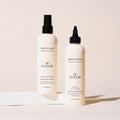
Goldie Miracle Mist is a vet and dermatologist approved spray, formulated with hypochlorous acid, a clinically recognized broad-spectrum antimicrobial, that helps regulate the skin microbiome so yeast and bacteria have a harder time overgrowing — and provides quick relief from itching and irritation.
For a Frenchie specifically, two properties do the heavy lifting:
-
Safe anywhere on the body, including the face and near the eyes — which is exactly where the worst folds are, and where other products might not be recommended to use.
-
Completely lick-safe — which matters on a breed that will absolutely reach its own armpits, belly, and paws
Use it on red folds, hot spots, itchy armpits and bellies, paws, and any irritated patch. Spray, let it air dry, don't rinse.
3. Ears — weekly, and after every bath or swim
Goldie Miracle Rinse is an ear rinse formulated with hypochlorous acid, a clinically recognized broad-spectrum antimicrobial, that supports a balanced ear microbiome. It’s non-greasy, non-stinging, and gentle enough for regular maintenance.
Ears need their own product because a spray can't reach into a canal. Given how heavily this breed is predisposed to ear problems, weekly maintenance is the single most underrated item in a Frenchie routine.
Smell the ears once a week. Odor arrives before visible inflammation, which makes it your cheapest early warning.
4. Bath time — every three to four weeks
Use a gentle, barrier-supporting shampoo like Goldie Healthy Coat Shampoo rather than a degreasing or heavily fragranced formula. Dry the folds thoroughly — a bath that leaves damp folds behind can leave your dog more vulnerable to skin issues.
Resist the urge to bathe more often when the itching gets bad. Over-bathing strips the natural skin barrier and makes the skin more hospitable to overgrowth, not less. More frequent fold wipes are the better lever.
5. Odor between baths
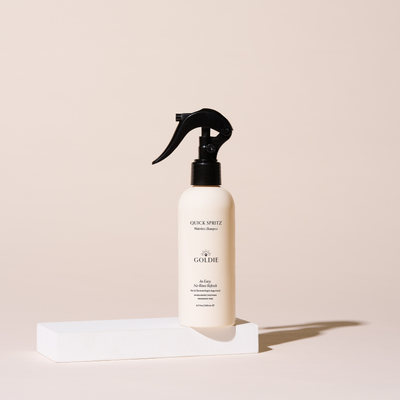
If your Frenchie smells and it isn't localized to one fold, Goldie Quick Spritz is a lick-safe deodorizing spray that works on the microbial source of odor rather than perfuming over it. Fragrance on a yeasty coat gives you yeast plus perfume, and the yeast outlasts the perfume every time.
Dog still stinks after a bath? →
6. Paws after walks in allergy season
Wiping the paws removes the allergen load before your dog licks it off. This single habit reduces paw licking and cuts the amount of allergen redistributed onto the rest of the coat and into the folds.
Why does my dog keep licking his paws? →
Putting it together
|
Frequency |
What |
|---|---|
|
Daily (allergy/humid season) |
Fold wipe + dry · paw wipe after walks · Miracle Mist on active flare spots |
|
Three to four times a week |
Fold wipe + dry · tail pocket |
|
Weekly |
Miracle Rinse in ears · smell the ears · full skin once-over |
|
Every three to four weeks |
Bath with Healthy Coat Shampoo, dry folds thoroughly |
|
As needed |
Quick Spritz for general odor |
Build a simple daily skin routine
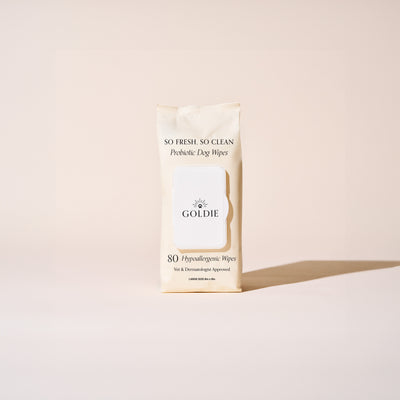
So Fresh, So Clean Probiotic Wipes
Removes dirt, allergens and irritants from paws, folds, and coat.
From $14.00
Shop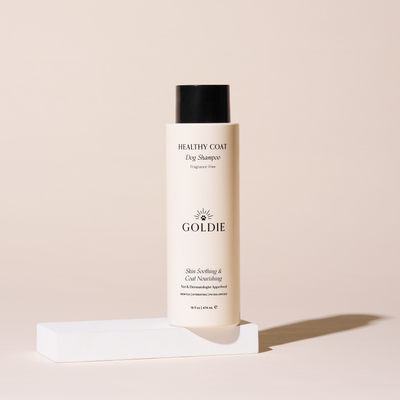
Because a Frenchie routine leans on the skin and ear pieces together, the Miracle Duo (Mist + Rinse) covers the two highest-frequency jobs in one go — worth knowing if you're building the routine from scratch.
What to avoid on Frenchie skin
The filter on what to use for this breed is strict, because products land on facial folds inches from the eyes and on skin the dog can reach with its tongue:
-
Essential oils (tea tree especially) — toxic to dogs, unsafe near eyes.
-
Alcohol-based products — sting badly on inflamed fold skin.
-
Hydrogen peroxide — damages healing tissue.
-
Vinegar or apple cider vinegar — burns raw, broken skin.
-
Human creams, hydrocortisone, and antifungals — not formulated for licking or for facial use.
-
Heavily fragranced shampoos and sprays — a common trigger for reactive skin.
-
Baby powder or cornstarch in folds — cakes with moisture and feeds microbial growth.
-
Cotton swabs down the ear canal — packs debris deeper and risks the eardrum.
Seasonal reality check
Most Frenchies have a bad season rather than a bad year. Plan for it:
-
Spring and summer — pollen and grass allergens peak; paw wipes and daily fold care matter most.
-
Humid months — folds stop drying on their own; move to daily.
-
Late summer — yeast overgrowth peaks after weeks of warm, damp skin.
-
Winter — indoor heat plus dust mites; less fold trouble, more generalized dry itch.
Tracking your dog's pattern for one year tells you when to escalate the routine before the flare rather than after.
When to see your vet
Book a visit with your vet when your Frenchie is experiencing:
-
Open sores, raw or weeping skin, or bleeding.
-
Spreading hair loss, or skin that's thickened and darkened.
-
Ear pain, head shaking, or discharge.
-
Flare-ups that recur despite consistent care.
-
Any sudden, rapidly worsening patch.
Frenchie allergies frequently benefit from prescription support alongside topical care, and the modern options are considerably better now, compared to a decade ago. There's a real difference between managing a controlled allergy and firefighting an uncontrolled one. If you're running the routine properly and still seeing repeat flares, that's something to discuss with your vet rather than trying a different product.
Frequently Asked Questions
At what age do French Bulldog skin problems start?
Are French Bulldog skin problems contagious?
Why is my French Bulldog losing hair in patches?
Why does my French Bulldog have bumps on the skin?
Can French Bulldogs get acne?
Can I use baby wipes on my French Bulldog’s folds?
Can I put coconut oil on my French Bulldog’s itchy skin?
Why does my French Bulldog keep getting hot spots?