

Dog Ear Infection Treatment: What Actually Helps and When to See a Vet
Dog ear infection treatment starts with a diagnosis, because medication for bacteria or yeast, pain relief, and the right cleaning plan all depend on what is inside the ear. Learn what actually helps, whether every infection needs antibiotics, where cleaning fits, and why the same infection keeps coming back.

Updated September 29, 2026 · 6 min read
Listen to this article
Read aloud in your browser. Product blocks and navigation are skipped.
In This Article
- Loading contents…
Effective dog ear infection treatment starts with finding out what is happening inside the ear. A veterinarian may recommend medication for bacteria or yeast, help for pain and inflammation, and a specific cleaning plan. Recurring infections also need attention to the underlying trigger, such as allergies. An over-the-counter rinse alone can't make those decisions.
That doesn't mean you're powerless at home. It means the most useful things you do should support a diagnosis and a plan, rather than leave you buying a new bottle every time the smell comes back.
Key Takeaways
- Diagnosis comes first. Treatment depends on what the vet finds in the canal, the eardrum, and a sample under the microscope.
- Not every ear needs antibiotics. Bacteria, yeast, and mites each need a different treatment, and mixed problems occur.
- Know each medication's job. Ask which product treats the infection and which handles pain and inflammation.
- Clean only when it belongs in the plan. Some sore ears need pain and inflammation controlled before cleaning starts.
- Finish the course and keep the recheck. A faded smell doesn't confirm the infection has cleared.
- Know the urgent signs. A head tilt, loss of balance, abnormal eye movements, or facial asymmetry need prompt assessment.
First, know when the ear needs prompt care
Seek urgent assessment for: a persistent head tilt, loss of balance, abnormal eye movements, facial asymmetry, vomiting with balance changes, or marked distress.
Contact your veterinarian for a new combination of odor, discharge, redness, scratching, or repeated head shaking. Call sooner if your dog cries, won't let you touch the ear, or has a swollen ear flap.
Seek urgent assessment for a persistent head tilt, loss of balance, abnormal eye movements, facial asymmetry, vomiting with balance changes, or marked distress. These signs need more than a routine ear cleaning.
If you are unsure whether the shaking is excessive, our guide to why dogs keep shaking their heads can help you describe the pattern. Eating normally doesn't rule out a painful ear.
What the veterinarian needs to find out
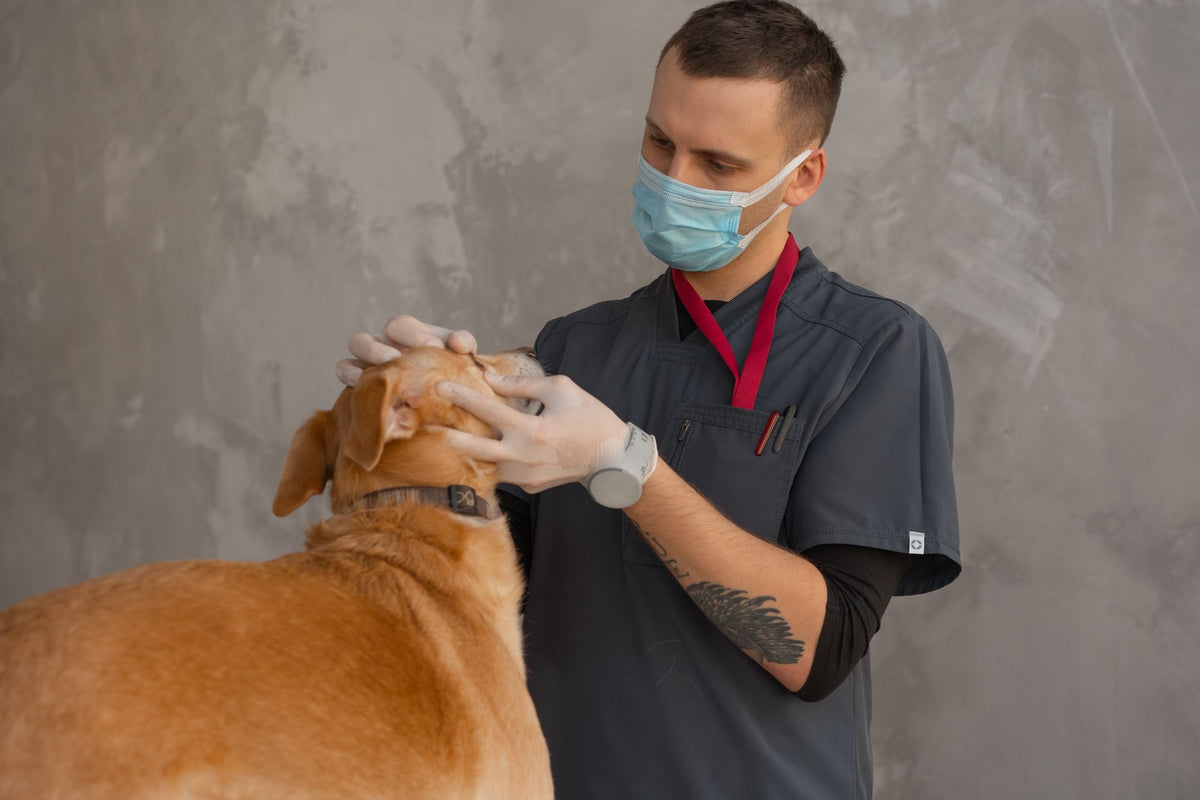
You may hear the term otitis externa, which means inflammation of the outer ear canal. Otitis media involves the middle ear. These aren't interchangeable diagnoses, and the part you can see when you lift the flap doesn't reveal the full extent of disease. VCA's overview explains the distinction and why deeper involvement changes the plan.
An ear problem has several parts: the condition of the canal, what organisms are present, how painful it is, and what may have started it. The treatment should address the relevant parts, not just the visible discharge.
An ear problem has several parts: the condition of the canal, what organisms are present, how painful it is, and what may have started it.
Dr. Tatiana Rogers, DVMIs the ear canal inflamed or obstructed?
An otoscope lets the vet examine beyond the opening. Wax, swelling, a foreign body, or chronic tissue changes can make it difficult to see. Some dogs need pain relief or sedation for a safe, thorough examination.
The eardrum matters because its condition affects which products can be used. Don't assume it is intact because your dog has never had a diagnosed rupture.
Are bacteria, yeast, or mites involved?
An ear swab examined under a microscope—ear cytology—can help identify yeast, bacteria, inflammatory cells, and sometimes ear mites or mite eggs. Your veterinarian may also look for mites with an otoscope. Culture and susceptibility testing may be useful in selected cases, such as severe or chronic disease, rod-shaped bacteria on cytology, suspected resistance, poor response to appropriate treatment, or suspected middle-ear involvement. A brown or yellow color doesn't choose the medication. A brown or yellow color doesn't choose the medication. VCA explains the diagnostic steps.
What made this ear vulnerable?
Tell the vet about swimming, recent grooming, previous treatment, and skin symptoms elsewhere. A dog with recurring ears and itchy paws may need a wider skin investigation. A sudden one-sided problem after a walk may point the examination in another direction.
What actually helps: treatment by purpose
| Part of the plan | What it is meant to do | What to clarify before going home |
|---|---|---|
| Prescribed antibacterial or antifungal treatment | Address the organisms identified in the ear | Which ear, how much, how often, and for how long |
| Anti-inflammatory or pain treatment | Make the dog more comfortable and reduce inflammation | When improvement is expected and which changes to report |
| Cleaning, when appropriate | Remove material that interferes with care | Product, technique, timing, and whether to delay cleaning |
| Underlying-condition management | Reduce the reasons episodes return | Allergy, parasite, anatomical, or other follow-up needs |
| Recheck | Assess healing and whether infection remains | Date and whether repeat sampling is planned |
Some treatments are applied in the clinic and remain in the ear. Others are given at home. The instructions for one aren't transferable to another, and adding a cleaner can be inappropriate with certain in-ear medications.
Do all ear infections need antibiotics?
No. Antibiotics target bacteria; a yeast problem may need an antifungal, and mites need an effective parasite treatment. Some ears are inflamed without an active infection. Mixed infections also occur.
For uncomplicated otitis externa, topical treatment is usually preferred because it delivers medication directly to the ear canal. Oral antibiotics are reserved for selected situations, such as suspected or confirmed middle-ear disease, severe disease extending beyond the external canal, or cases in which topical treatment cannot be used effectively. The examination, cytology findings, eardrum status, and severity of disease guide the prescription.
Ask what each medication is treating. If you know which product handles the infection and which handles inflammation, you're less likely to stop one too early or substitute a grooming product for it.
Cleaning helps when it belongs in the plan
Debris can interfere with topical treatment reaching the affected skin. Cornell's ear-cleaning guide explains that role, while also advising owners to stop if cleaning hurts.
Before cleaning an actively sore ear, ask the clinic what to use and when to start. Some dogs need inflammation and pain controlled first. Don't force liquid into a swollen canal or hold the bottle tip tightly against the opening.
Use the prescribed ear cleaning solution as directed, allow shaking, and remove only material you can reach safely with gauze or a cotton ball. Leave deep work to the clinic. Cotton swabs can push debris farther down. Hydrogen peroxide, rubbing alcohol, and improvised vinegar mixtures don't belong in a trial-and-error treatment plan.
Where Goldie Miracle Rinse fits
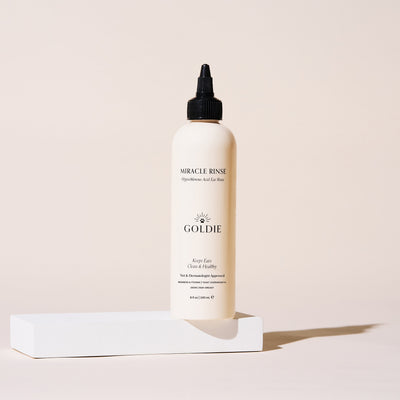
Goldie Miracle Rinse is an option for ear care when your veterinarian says a rinse is appropriate. Ask whether it belongs during this episode, after treatment, or only as maintenance. That timing is more useful than buying a cleaner and assuming it can be added immediately.
Keep your treatment instructions beside the bottle. If different family members administer care, a simple check mark after each dose helps prevent both missed applications and accidental duplicates.

What to do between the first visit and the recheck
Follow the plan consistently and keep water out of the affected ear. Ask when swimming, baths, and grooming can resume. If your dog fights every application, call the clinic for a demonstration or another option instead of forcing the session.
Track changes in comfort as well as appearance. Is the dog sleeping without scratching? Does touching near the ear still cause a flinch? Is discharge returning quickly? Those observations make the follow-up more useful.
For everyday dirt on the surrounding coat, Goldie's Probiotic Wipes can serve their usual grooming role. Keep them out of the canal and away from an area your vet has asked you to leave untouched.
Don't stop treatment solely because the smell has faded. Ask your vet how resolution will be confirmed. Also call if things worsen, your dog develops a new reaction, or the expected improvement doesn't happen.
Why the same ear infection keeps returning
Sometimes the original infection has not fully resolved. Sometimes treatment clears the microbial overgrowth, but the underlying inflammation remains and allows a new flare to develop. Recurring disease can also reflect an unresolved primary cause—such as allergy, a foreign body, a mass, or middle-ear disease—or chronic canal thickening and narrowing that makes treatment less effective.
The answer may involve an allergy plan, a different diagnostic test, an examination for deeper disease, or specialist help. The American College of Veterinary Surgeons describes how long-standing ear disease can eventually require surgery in selected cases. That is a reason to take repeated pain seriously, not a reason to assume surgery is the next step for every infection.
Breed-specific habits can still help. See our Golden Retriever ear guide or Doodle ear guide for the grooming and lifestyle details to discuss with your veterinarian.
Build a simple daily skin routine
Treat the episode and plan for what comes after
The first goal is comfort and appropriate treatment. The next is a routine that makes changes easier to catch. Once your vet has set that plan, Goldie Miracle Rinse can be considered for the ear-care step that belongs in it.
You shouldn't have to guess whether the next bottle will finally work. A diagnosis, clear instructions, and a recheck give every part of the routine a purpose.
This educational guide does not replace examination, diagnosis, or prescribed veterinary treatment.Frequently Asked Questions
Can an ear infection go away on its own?
How long does treatment take?
Can I use the drops from last time?
Should I clean immediately before the appointment?
What if I can't afford a visit?
Can I use Miracle Rinse instead of medication?
Does a strong smell prove yeast?
When is an ear problem urgent?