

Doodle Ear Problems: Why Poodle Mixes Are Prone to Ear Infections
Floppy flaps, hair near the ear opening, trapped moisture, wax, and allergies make Doodle ears more demanding to care for, but infection isn't inevitable. Learn why Poodle mixes are prone to ear problems, the early signs to watch, whether to pluck ear hair, and a routine that works between vet visits.

Updated September 29, 2026 · 6 min read
Listen to this article
Read aloud in your browser. Product blocks and navigation are skipped.
In This Article
- Loading contents…
Doodle ear problems can involve floppy ear flaps, hair around the ear opening, moisture, wax, and underlying allergies. Those factors can make ear care more demanding, but an infection isn't inevitable. The most useful routine combines gentle observation, sensible grooming, and a veterinarian's plan for any recurring inflammation.
If your Goldendoodle or Labradoodle has had the same ear cleaned over and over, you already know that clean-looking and comfortable aren't always the same thing. The opening can look better while your dog keeps scratching at something deeper.
Key Takeaways
- Infection isn't inevitable. Floppy flaps, hair, moisture, wax, and allergies make Doodle ear care more demanding, not doomed.
- Watch the early signs. Head shaking, face rubbing, a new odor, or pulling away from ear handling deserve attention before discharge appears.
- Allergies are often the recurring trigger. Tell your vet about paw licking, face rubbing, and belly itch, too.
- Don't pluck by default. Ask your vet whether to leave ear hair alone, trim it, or manage it a specific way.
- Aim for comfort, not a wax-free ear. One agreed cleaning plan beats extra cleaning.
- Know the urgent signs. A head tilt, stumbling, or abnormal eye movements need urgent veterinary care.
Why Poodle-mix ears need a closer look
An ear canal is lined with skin. It can become inflamed for many of the same reasons the skin on the belly or feet does. Bacteria and yeast may then overgrow in that changed environment.
The ear flap changes the environment
Long, hanging flaps cover the ear opening. In a dog that swims, has heavy wax, or develops inflammation, that can make moisture and debris harder to manage. It doesn't mean every floppy ear is infected or that erect ears never have trouble.
Hair can complicate grooming
Hair near the opening may hold debris or form mats. It can also hide early changes in the skin. How much hair a Doodle has, and whether that hair causes a problem, varies from dog to dog.
Don't assume the answer is to remove everything. Hair management should make care easier without creating fresh irritation.
Allergies may be the recurring trigger
When the ear keeps flaring after apparently successful treatment, ask what started the inflammation. An allergy plan may matter more than changing the cleaner again. Veterinary guidance on otitis externa distinguishes underlying causes from factors that allow ear disease to persist.
Tell your vet about paw licking, face rubbing, and belly itch, even if the appointment is for an ear. Those details may help connect symptoms that seem unrelated at home.
Early signs of Goldendoodle ear infections and other Doodle ear problems
You don't need to wait for dramatic discharge. Pay attention if your dog starts shaking their head repeatedly, rubs one side of the face on furniture, or moves away when you reach for an ear.
Lift the flap only if your dog is comfortable with it. Compare the two sides for new redness, swelling, debris, or odor. Note which side your dog favors. Avoid digging into the opening to get a better look.
| Change | Why it matters | What to do |
|---|---|---|
| More head shaking than usual | The ear may be uncomfortable even before obvious discharge | Watch the pattern and call if it continues |
| New odor or accumulating wax | A change in the ear environment needs assessment | Ask your vet whether to leave the ear uncleaned before the visit |
| Pain, swelling, or discharge | Routine grooming may be inappropriate | Arrange prompt veterinary care |
| Persistent head tilt, stumbling, or abnormal eye movements | A deeper ear or neurological problem is possible | Seek urgent veterinary assessment |
| Symptoms after plucking or a grooming appointment | The timing may help identify irritation or an existing problem | Tell both the clinic and groomer what happened |
Seek urgent veterinary assessment: persistent head tilt, stumbling, or abnormal eye movements.
Our guide to repeated head shaking explains why the behavior deserves attention even when your dog is otherwise eating and playing normally.
What happens at the veterinary appointment?
The veterinarian may examine the ear with an otoscope and perform ear cytology, which means examining a sample of discharge under a microscope. Cytology can identify inflammatory cells and help determine whether yeast, bacteria, mites, or other findings may be contributing, which guides treatment selection.. A painful or heavily obstructed ear may need additional care before the whole canal can be examined. VCA's ear-infection overview explains why an examination matters before choosing drops.
Bring the names of previous cleaners and medicines. “The white bottle” won't tell the clinic which ingredients were used, whether the product was prescribed for this episode, or whether it belongs with the next treatment.
If the problem returns, ask whether the original infection fully cleared and whether allergies, a foreign body, or chronic canal changes need investigation. A repeat episode isn't automatically evidence that you failed at grooming.
What treatment can involve
The right treatment depends on the examination and sample, not the breed name. Prescription ear drops may combine medicine for bacteria or yeast with an anti-inflammatory ingredient. Ear mites require appropriate parasite treatment. Your vet also needs to consider the ear drum before selecting products for the canal. Don't reuse another dog's medication or stop the current course just because the odor has faded.
Chronic or repeatedly relapsing ear inflammation can lead to thickening, narrowing, and permanent remodeling of the ear canal. Secondary bacterial or yeast infection can make that process more painful and difficult to control. In severe end-stage disease, some dogs need specialist assessment or surgery when medical management no longer works. That isn't the expected outcome of every itchy ear. It's a reason to investigate repeated flare-ups early, rather than accepting them as normal for a Doodle. VCA explains the complications and treatment decisions.
Should you pluck a Doodle's ear hair?
There is no universal rule to pluck every Doodle. The decision depends on whether hair is obstructing care and on the ear's medical history. Routine removal from an ear that isn't having problems can itself cause inflammation.
Ask your vet to give your groomer a specific instruction: leave it alone, trim accessible hair, or manage selected hair in a particular way. That is much more useful than a vague request to “clean the ears really well.”
Don't use scissors deep in the ear or pull out a mat attached to painful skin. If your dog regularly develops discomfort after grooming, bring that history to the next appointment. Keep the discussion practical: what was done, when symptoms began, and what should change next time.
A routine that works between appointments
Make ear checks part of coat care
When you brush behind the ears, briefly check the visible opening. Notice damp or matted fur and your dog's reaction to handling. Observation gives you a chance to catch changes without repeatedly wetting or wiping a healthy canal.
Use one agreed ear cleaning plan
If cleaning is recommended, follow the chosen product's directions and your vet's interval. Let your dog shake out excess solution and wipe only accessible material with clean gauze or a cotton ball. Keep cotton swabs out of the canal. Stop if the dog seems painful.
You don't need to achieve a perfectly wax-free ear. You need a comfortable ear and a routine that doesn't leave the skin irritated.
For hairy ears, regular grooming should also address matted hair around the flap and opening. Ask the groomer to flag changes in your dog's ears before applying anything. A short note about redness or swelling inside the visible opening can help you separate a new issue from an ongoing one.
You don't need to achieve a perfectly wax-free ear. You need a comfortable ear and a routine that doesn't leave the skin irritated.
Dr. Tatiana Rogers, DVMPlan for swims and baths
Keep bath water out of the ear opening and dry the flap and surrounding hair afterward. For frequent swimmers, ask whether an appropriate drying product is needed. Don't assume an ear rinse has drying properties.
If your Doodle inherited an enthusiasm for every available puddle, our Golden Retriever ear guide covers the water-loving side of the problem.
Keep the whole dog in view
Ears that flare alongside feet or belly skin deserve a coordinated plan. Why Is My Dog So Itchy? can help you describe that wider pattern. A cleaner alone won't resolve all the reasons a dog may itch.
Build a simple daily skin routine
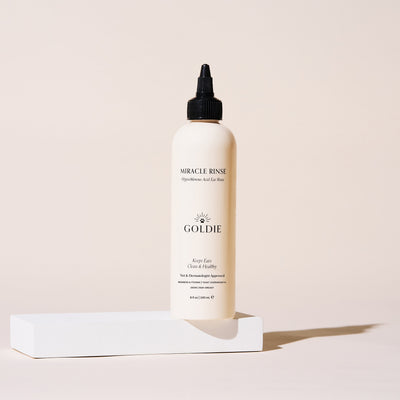
Where Goldie fits in a Doodle's routine
Goldie Miracle Rinse can be considered for an ear-maintenance plan your vet approves. Keep it with the grooming supplies so the people caring for your dog use the same product and instructions. Don't layer it over a prescription ear treatment without checking compatibility.
For ordinary dirt on the paws and coat after outings, So Fresh, So Clean Probiotic Wipes offer a separate cleanup step. They belong on the areas their label covers, not deep inside the ear canal.
If localized skin irritation is also part of the picture, ask where Miracle Mist fits. Ear care, skin care, and treatment for an active infection have different jobs. Buying all three products isn't a substitute for finding the reason those ears keep flaring.

Make ear care less of a guessing game
Know what comfortable ears look like on your Doodle. Keep your vet and groomer working from the same instructions, and treat recurring symptoms as useful information. If maintenance is recommended, Goldie Miracle Rinse gives you an option to discuss and keep close at hand.
The best routine is one your dog can tolerate and you can repeat, with a clear plan for what to do when something changes.
This guide is educational and is not a diagnosis or an individual treatment plan.Frequently Asked Questions
Are Goldendoodles and Labradoodles guaranteed to get ear infections?
Does a hypoallergenic coat protect a Doodle from allergies?
Is brown ear wax always yeast?
Can I wait until the next grooming appointment?
How often should I clean my Doodle's ears?
Should my groomer pluck every visit?
Why does only one ear keep getting infected?
Can Miracle Rinse replace prescription drops?